.png)

When Five Minutes Means an Hour - The Time Blindness Problem
Chapter 5: Why "we have plenty of time" is the most dangerous phrase in our house
We've covered how ADHD isn't a free pass to be a knobhead (Part 1), why direct communication beats hints (Part 2), how rejection sensitivity creates emotional chaos (Part 3), and why hyperfocus looks productive whilst creating abandonment (Part 4). But there's another neurological reality that undermines every plan, every schedule, and every promise we make - time blindness.
We were heading to Manchester Christmas markets as a family a few weeks ago. The plan was to arrive around 11am - early enough to beat the worst crowds, late enough that we wouldn't need to rush breakfast. Amanda had calculated when we needed to leave, factored in traffic, built in a small buffer. We had a target departure time.
I decided to have a shower before we left.
"We need to leave soon," Amanda reminded me as I headed upstairs.
"I know," I said. "I'll be quick."
I took my book into the bathroom with me.
Amanda found me forty minutes later, still in the shower, three chapters deep into my book, genuinely absorbed in the story. She didn't say anything. She didn't need to. The carefully controlled expression on her face said everything.
"I just... I was finishing this section," I offered weakly, as if that explained why I'd spent forty minutes in the shower reading a book when we were supposed to be leaving for a family day out.
We didn't arrive in Manchester at 11am. We arrived sometime after midday, having missed the quieter morning period. The girls were frustrated that we were late again. Amanda was furious that I'd prioritised reading in the shower over our family plans. And I was genuinely baffled about how forty minutes had passed when it felt like maybe ten.
This isn't occasional poor planning. This is chronic time blindness - a neurological inability to perceive time passing accurately. And it shapes every aspect of our relationship in ways most people can't fathom until they've lived with someone whose brain experiences time as a complete fiction.
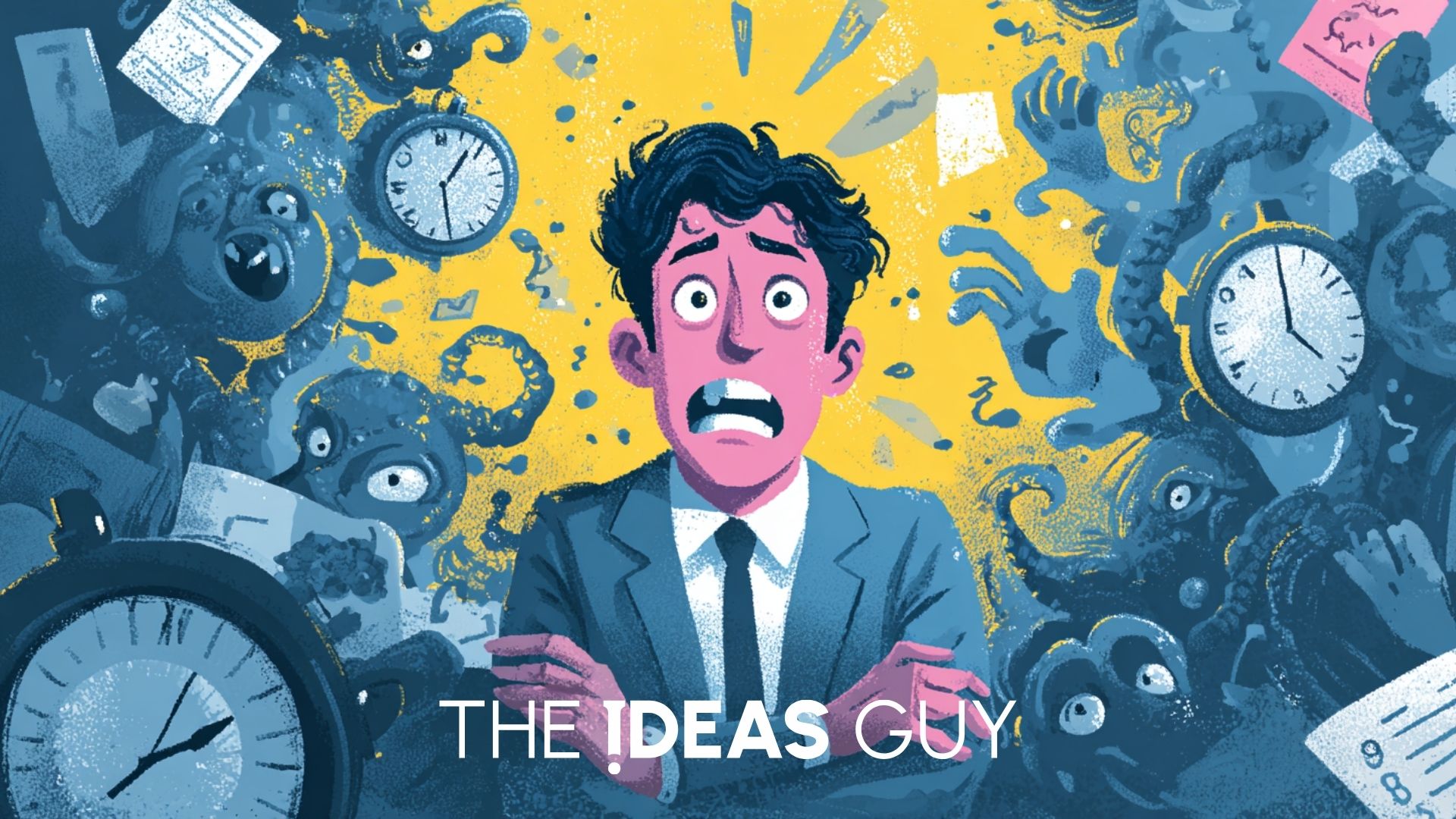
What Time Blindness Actually Is
Time blindness isn't "bad time management" or "poor planning" or any of the other moral judgements we heap on chronically late people. It's a neurological reality where ADHD brains cannot accurately perceive, estimate, or track time.
Dr. Russell Barkley's research on ADHD and time perception is crucial here again. Barkley identifies time blindness as one of the core deficits in ADHD, stemming from executive dysfunction in the prefrontal cortex - the same brain region responsible for planning, organisation, and self-regulation.
"Those with ADHD are time blind in the sense that they cannot sense or track the passage of time as easily as others. That can impair planning, time management, and meeting deadlines.” Russell Barkley
When I stepped into that shower with my book, I wasn't being careless or selfish. My brain genuinely could not accurately estimate how long I'd spend reading, how long the shower itself would take, or how these durations added up against our departure time.
Neuroscientist Dr. Katya Rubia's research using brain imaging shows that ADHD brains have reduced activation in brain regions associated with time perception - particularly the cerebellum and basal ganglia. These regions help neurotypical brains maintain an internal sense of duration. In ADHD brains, this internal clock simply doesn't function reliably.
What this means practically is that when neurotypical people think "I'll spend five minutes on this," they have an internal sense of what five minutes feels like. Their brains track time passing and signal when five minutes is approaching. My brain doesn't do this. Five minutes and fifty minutes feel approximately the same length whilst I'm experiencing them, however crazy that sounds.
This isn't metaphorical. It's not that time "flies when I'm having fun." It's that my brain cannot reliably distinguish between five minutes and an hour unless I'm actively, consciously counting the minutes - which requires sustained attention I also struggle with.
The philosopher Henri Bergson distinguished between "clock time" (objective, measured duration) and "lived time" (subjective experience of duration). For most people, these two kinds of time remain roughly aligned. For ADHD brains, they diverge dramatically. My lived time bears almost no relationship to clock time.

This creates a peculiar kind of relationship with reality. Amanda lives in clock time - measurable, predictable, reliable. I live in lived time - elastic, unpredictable, constantly surprising me. We're trying to coordinate a life together whilst inhabiting fundamentally different temporal realities.
When I took that book into the shower, I didn't think "I'm going to spend forty minutes reading whilst my family waits for me." I thought "I'll just read a few pages whilst I shower." In my time-blind brain, those two things felt equivalent. They obviously weren't.
The "I Have Time" Delusion
The most dangerous phrase in our household is "we have plenty of time." Not because it's a lie I'm telling, but because it's a truth I genuinely believe in the moment.
That morning heading to Manchester, I looked at the departure time and genuinely believed I had time for a shower. The calculation seemed sound: quick shower, get dressed, we leave. Sorted. The problem is that "quick shower" in my brain might mean 15 minutes. In reality, especially when I've brought a book, it means 30-40 minutes or more.
This disconnect between estimated duration and actual duration affects everything. I'll say "I'll just quickly finish this email" and spend 40 minutes on it. I'll say "I'll pop to the shops for milk" and arrive home two hours later, genuinely confused about where the time went as I was “just chatting to a few people I met”. I'll say "we can leave in 10 minutes" and still be getting ready 30 minutes later.
Amanda has learned that my time estimates are worse than useless - they're actively misleading. When I say "10 minutes," she translates that to "at least 30 minutes, possibly 45." When I say "quick shower," she knows we're going to be late (unless she nags at me and then I get into some of the other issues from previous editions in the series of blogs!)
"The hardest part," Amanda says, "is that you really believe it. You're not lying to me. You genuinely think you have time. Which means I can't trust your assessment of anything time-related."

This erosion of trust around time estimates creates anxiety for Amanda that most people wouldn't understand. When I say "we have time," she immediately starts calculating worst-case scenarios because my assessment of time available bears no relationship to reality.
Psychologist Dr. Ari Tuckman writes about ADHD and time management, noting that,
“People with ADHD have difficulty creating an accurate sense of how long things will take, both in the moment and when planning ahead." Dr. Ari Tuckman
This isn't occasional miscalculation - it's systematic inability to estimate duration.
The peculiar cruelty of time blindness is that I can't learn from experience in any meaningful way. You'd think that after decades of showers taking longer than anticipated, my brain would adjust its estimates. It doesn't. Every single time, I genuinely believe this shower will be different, will be quicker, will fit into the available time.
This creates a Groundhog Day quality to our mornings and departures. Amanda warns me we don't have time for something. I insist we do. I do the thing. We're late. Amanda is frustrated. I'm baffled about where the time went. We have this exact conversation the next week, with exactly the same outcome, as if we've never had it before.
The philosopher Friedrich Nietzsche wrote about eternal recurrence - the idea of living the same moments over and over. Time blindness creates a parody of this: the same time miscalculations recurring eternally, with no learning or adaptation possible.
The Procrastination-Rush-Botch Cycle
Time blindness creates a vicious cycle: I procrastinate until the last possible moment, then rush through tasks so frantically that I do them badly, then beat myself up for both the procrastination and the poor quality. This pattern makes no sense from the outside. If I know I'm time blind, if I know I underestimate duration, why don't I start earlier? Why do I consistently wait until the deadline is bearing down before beginning?
The answer is that deadlines are the only thing that makes time real to my ADHD brain. When the appointment is tomorrow, "tomorrow" exists in some vague future space that doesn't feel urgent or real. When the appointment is in 20 minutes, the deadline creates enough pressure that my brain finally registers time as something that matters.

Psychologist Dr. Piers Steel's research on procrastination identifies what he calls "temporal discounting" - the tendency to undervalue future rewards or consequences compared to immediate ones. For ADHD brains, this temporal discounting is extreme. Future deadlines genuinely don't exist in any meaningful sense until they become imminent.
“Never put off ‘til tomorrow, what you can do the day after tomorrow.” Mark Twain
So I wait. And wait. And then suddenly the deadline is here and I'm scrambling.
This is when the rushing begins. I'm smashing through tasks at breakneck speed, cutting corners, doing things badly because there's no time left to do them properly. I'm not choosing to do substandard work - I'm trapped in the consequences of my earlier time blindness.
The irony is devastating: my inability to perceive time accurately causes procrastination, which creates rushing, which produces poor quality work, which generates shame and self-criticism. Then the cycle repeats because shame doesn't fix time blindness.
"You'll spend ages reading in the shower," Amanda observes, "but then you'll rush through getting the girls to school so frantically that someone ends up in tears because you're barking orders at them." She's right. The leisurely forty minutes in the shower get paid for by frantic, stressful rushing where I'm snapping at everyone to hurry up - as if my time blindness is somehow their fault.
This creates what psychologist Dr. William Dodson calls "the wall of awful" - the accumulated anxiety, shame, and avoidance that builds up around tasks. But unlike typical avoidance, my wall gets built after the task is complete. I finish something badly, feel ashamed about the quality, then carry that shame forward to the next similar task.
The philosopher Søren Kierkegaard wrote about anxiety as "the dizziness of freedom" - the vertigo we experience when confronting life's possibilities. Time blindness creates a different kind of dizziness: the vertigo of discovering that time has passed without your awareness, that deadlines have arrived without warning, that you've once again failed to do something properly because you ran out of time you didn't know you'd lost.
“Anxiety may be compared with dizziness. He whose eye happens to look down the yawning abyss becomes dizzy. But what is the reason for this? It is just as much in his own eye as in the abyss, for suppose he had not looked down. Hence, anxiety is the dizziness of freedom, which emerges when the spirit wants to posit the synthesis and freedom looks down into its own possibility, laying hold of finiteness to support itself. Freedom succumbs to dizziness. Further than this, psychology cannot and will not go. In that very moment everything is changed, and freedom, when it again rises, sees that it is guilty. Between these two moments lies the leap, which no science has explained and which no science can explain. He who becomes guilty in anxiety becomes as ambiguously guilty as it is possible to become.” Søren Kierkegaard
The Chronic Lateness Pattern
We're "that family." The ones who arrive last to birthday parties. The ones still pulling into the car park as everyone else is leaving. The ones whose children have learned to add 20 minutes to whatever time Dad says we're leaving. This chronic lateness isn't occasional bad luck or traffic problems. It's systematic time blindness manifesting as a pattern so consistent that people factor it into their planning.
This should bother me more than it does. That's the shameful truth - I beat myself up about being late in the moment, feel genuinely terrible about it, apologise profusely, promise to do better next time. Then I forget about it until I'm late again, at which point the cycle repeats.
The self-criticism is real and intense whilst it's happening. I feel awful about keeping people waiting. I'm embarrassed about being unreliable. I genuinely want to change. But the self-criticism doesn't translate into behaviour change because it doesn't address the underlying neurological reality.
Dr. Barkley notes that ADHD creates problems with "hindsight and forethought" - the ability to learn from past experiences and apply those lessons to future planning. I can feel terrible about being late today without that feeling creating any meaningful change in tomorrow's behaviour.
Amanda experiences this as a particular kind of frustration. "You're always sorry," she says, "but sorry doesn't mean anything if the behaviour never changes. At some point, the apologies just become noise." Does this sound familiar because I have said it MANY times before in my content? 🤦♂️
This is one of the harder truths in this series: my genuine remorse about time blindness consequences doesn't make those consequences any less real for everyone else. The apologies feel meaningful to me because I mean them in the moment. But to Amanda and the girls, they're just the predictable conclusion to a pattern that will repeat itself next week.
There is a real importance that comes with promises and the faculty of making and keeping commitments are essential to human relationships. Time blindness makes me a chronic promise-breaker, not through malice or carelessness, but through neurological inability to track time accurately enough to honour my commitments.
"I'll be ready in five minutes" is a promise I cannot keep because I don't know what five minutes is. "We'll leave at 10am" is a commitment I cannot honour because time will slip away from me between now and then. Every time estimate becomes a broken promise, eroding trust in ways that apologies cannot repair.

Amanda as Human Alarm System
Amanda has become our family's external time-tracking system. She monitors how long I've been in the shower. She tracks when we need to leave. She provides warnings at intervals: "We need to leave in 30 minutes... We need to leave in 15 minutes... We need to leave now." This isn't a role she chose. It's a role she's had to adopt because otherwise nothing happens on time and nobody arrives anywhere when they're supposed to.
"I'm exhausted from being the time police," Amanda admits (those who know her job know the irony in this!) "I have to track everything because you can't. I have to remember when we're supposed to leave because you'll forget. I have to give you warnings because otherwise you'll look up surprised when we're already late."
This emotional labour is invisible to most people but constant for Amanda. She can't relax into her own timing because she's managing mine as well. She can't assume I'll be ready when I say I will because experience has taught her I won't be.
The morning we went to Manchester, Amanda had already calculated when we needed to leave. She'd already factored in my tendency to underestimate how long things take. She'd already built in buffer time. But she can't physically prevent me from taking a book into the shower, and she can't drag me out when I lose track of time.
"Sometimes I warn you and you ignore me," Amanda says. "Sometimes I warn you and you get defensive about being nagged. Either way, I'm the villain - either for letting us be late or for micromanaging your time."
This impossible position - responsible for time management but without actual control - creates resentment that builds over years. Amanda didn't sign up to be my external time-tracking system. She signed up to be my partner. But my time blindness has forced her into a role she never wanted.
Psychologist Dr. Harriet Lerner writes about "overfunctioning and underfunctioning" patterns in relationships - where one partner compensates for the other's deficits to the point where the deficit-bearing partner never has to develop those capabilities. In our relationship, Amanda overfunctions on time management because my time blindness makes me incapable of managing it myself.
The challenge is that this isn't a pattern we can simply decide to change. Amanda can't stop tracking time because if she does, chaos ensues. I can't suddenly develop accurate time perception through willpower. We're stuck in a dynamic where Amanda bears the burden of time management for the entire family whilst I remain time-blind regardless of effort or intention.
Impact on the Girls
Our daughters have grown up with "the late family" as their normal. They've learned to factor in extra time when Dad says we're leaving. They've experienced being the last kids picked up from parties, the last family to arrive at events, the ones who always miss the start of things.
That morning heading to Manchester, they sat waiting whilst I finished my shower. They knew we were going to be late before we'd even left. They'd learned not to get excited about arrival times because Dad's time estimates are unreliable.
"The girls have stopped believing you when you say what time we're leaving," Amanda points out. "They know now that whatever time you say, we'll actually leave 30 minutes later."
This normalisation of lateness creates patterns they're learning as children that might affect them as adults. They're learning that time commitments are flexible, that other people will wait, that being late is just how some people are.
But they're also learning something else: that Mum is the reliable one. That Dad can't be trusted with time-dependent responsibilities. That Mum has to manage Dad's time because he can't manage it himself.
Child psychologist Dr. Gordon Neufeld writes about children's need for reliable, trustworthy attachments to adults. When one parent is chronically unreliable about time, children learn to orient towards the reliable parent for anything time-dependent. They stop trusting the unreliable parent not through conscious choice but through accumulated experience.
"They don't ask you what time we're leaving anymore," Amanda observes. "They ask me. Because they know I'll tell them the real time, not your optimistic estimate that won't actually happen."
This shift in trust isn't dramatic or hostile. The girls still love me, still want to spend time with me, still enjoy our relationship. But they've learned not to rely on me for anything requiring accurate time management. That's a loss, even if it's a subtle one.
What Actually Happens (Still No Solutions)
Most ADHD advice offers strategies for managing time blindness: set multiple alarms, use timers, build in buffer time, have someone remind you. These sound sensible. They don't reflect our reality. I've tried alarms. When I'm absorbed in reading in the shower, the alarm becomes background noise that my brain dismisses without conscious awareness. Amanda's reminders work better, but only because she's physically present to enforce them - which returns us to the problem of her being my human alarm system.
The buffer time doesn't work because I fill whatever time is available. If we need to leave at 10am and I build in 30 minutes of buffer, I'll just start getting ready 30 minutes later, using up the buffer before we've even begun.
"You can't out-plan time blindness," Amanda concludes. "I've tried everything. Nothing prevents you from losing track of time."
What we actually have is ongoing awareness that time blindness will keep creating problems. Amanda warns me about timing. I try to pay attention. I lose track of time anyway. We deal with the consequences. We repeat this pattern endlessly.
The morning we went to Manchester, Amanda knew the shower was going to take longer than I estimated. She knew we'd be late. She knew that her warnings wouldn't prevent me from taking my book into the bathroom. But she gave the warnings anyway because not warning me would feel like giving up entirely. This isn't elegant management of time blindness. This is damage limitation in a situation where actual solutions don't exist. Amanda can't make my brain perceive time accurately. I can't will myself into better time awareness. What we have instead is her compensating for my deficits whilst I remain chronically late and chronically apologetic about it.
The self-criticism I mentioned earlier is real but useless. I beat myself up about being late. I feel genuinely terrible about it. But the self-criticism doesn't create behaviour change because it doesn't address the neurological reality. Shame about time blindness doesn't cure time blindness. Amanda's exhaustion with my apologies is equally real. She's heard "I'm sorry we're late" hundreds of times. The apologies lose meaning when they're not accompanied by change. But I can't change something I have no conscious control over.
This is the messy reality we live with. No elegant solutions. No strategies that actually work. Just ongoing navigation of something difficult that affects everyone in the family.
The Reality Check
Living with time blindness in a relationship is exhausting for everyone involved. The person with time blindness experiences constant surprise at how much time has passed, constant shame about being late, constant broken promises to do better next time. The partner experiences constant responsibility for time management, constant anxiety about being late, constant erosion of trust in time-related commitments.
The children learn that one parent is reliable about time whilst the other isn't. They learn to factor in lateness as normal. They learn that time commitments are flexible in ways that might not serve them well as adults.
And nobody has elegant solutions. We have strategies that sometimes help a bit. We have awareness that doesn't translate into behaviour change. We have apologies that don't repair the ongoing damage to trust and reliability.
The key is maintaining the balance we've emphasised throughout this series: understanding time blindness as a neurological reality whilst refusing to let it eliminate all accountability. I can't control my brain's inability to perceive time accurately, but I can take responsibility for the impact that inability has on everyone else.
This means accepting Amanda's role as time manager without expecting her to be happy about it. It means acknowledging that chronic lateness affects the girls even if I don't intend that harm. It means recognising that genuine remorse about time blindness consequences doesn't make those consequences less real for everyone else.
Amanda and I haven't perfected this navigation. We probably never will. Time blindness is neurological, not fixable through willpower or better planning. But we've built a relationship that can withstand chronic lateness, missed estimates, and the constant frustration of time slipping away without either of us losing ourselves in the process.
That's not despite the time blindness - it's through learning to navigate it together with honesty about how messy and unsolvable it actually is.
Key Takeaways
- Time blindness is neurological, not moral failure - ADHD brains cannot reliably perceive, estimate, or track time. The shower with a book wasn't selfishness; it was genuine inability to track forty minutes passing.
- "I have time" is the most dangerous delusion - Time estimates from someone with time blindness are worse than useless. Partners learn to translate "five minutes" into "at least thirty minutes" through painful experience.
- Procrastination-rush-botch is a cycle, not a choice - Future deadlines don't feel real until imminent. Then frantic rushing produces poor quality work, generating shame that doesn't fix the underlying time blindness.
- Chronic lateness means chronic broken promises - Genuine remorse about being late doesn't create behaviour change when the problem is neurological. Apologies become meaningless noise without accompanying change.
- Partners become human alarm systems - Someone has to track time for the family. That burden falls to the non-time-blind partner, creating exhaustion and resentment around constant responsibility without control.
- Children learn who's reliable about time - Kids stop trusting the time-blind parent with time-dependent information. They orient towards the reliable parent for anything involving schedules, creating subtle but real trust erosion.
- No elegant solutions exist - Alarms get dismissed, timers get ignored, buffer time gets filled. What remains is ongoing navigation of something difficult, with awareness that doesn't translate into behaviour change.
My issues with time won't improve with better intentions or increased self-criticism. The Manchester Christmas market trip will happen again - different location, same pattern. I'll genuinely believe I have time for something. Amanda will warn me we don't. I'll do it anyway. We'll be late. Everyone will be frustrated. And no amount of remorse will prevent the next occurrence because remorse doesn't rewire the prefrontal cortex. What changes isn't the time blindness itself but our collective honesty about its unchangeable nature and also me putting things in place to reduce the impact of it on everyone, including myself. Amanda's exhaustion with being our human clock is valid. The girls' learned distrust of my time estimates is warranted. My shame about chronic lateness is real but ultimately useless. The relationship survives not because we've solved time blindness, but because we've stopped pretending it's fully solvable and started building around its permanent presence instead.
Further Reading
Discover more interesting articles here.