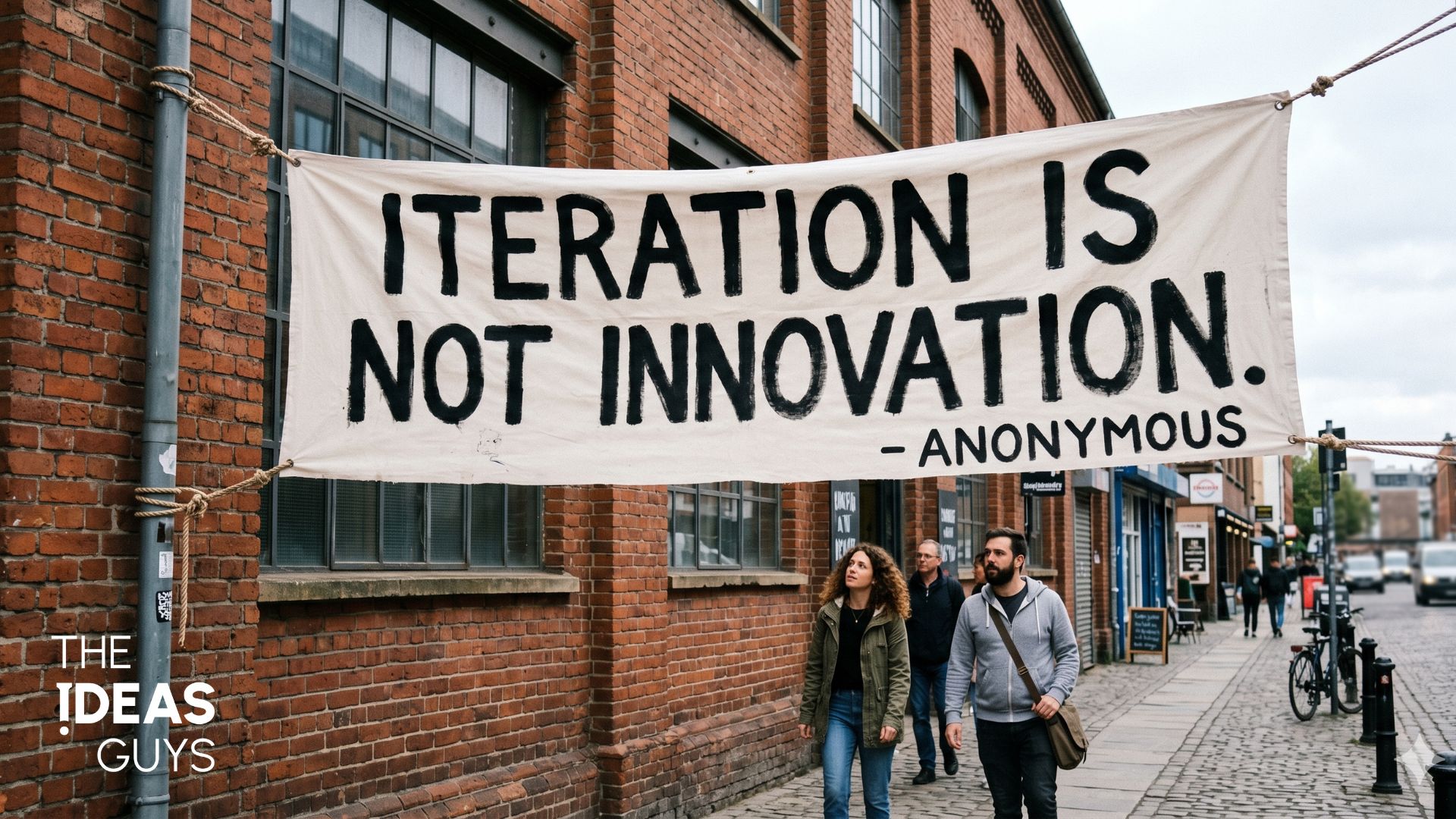
.png)
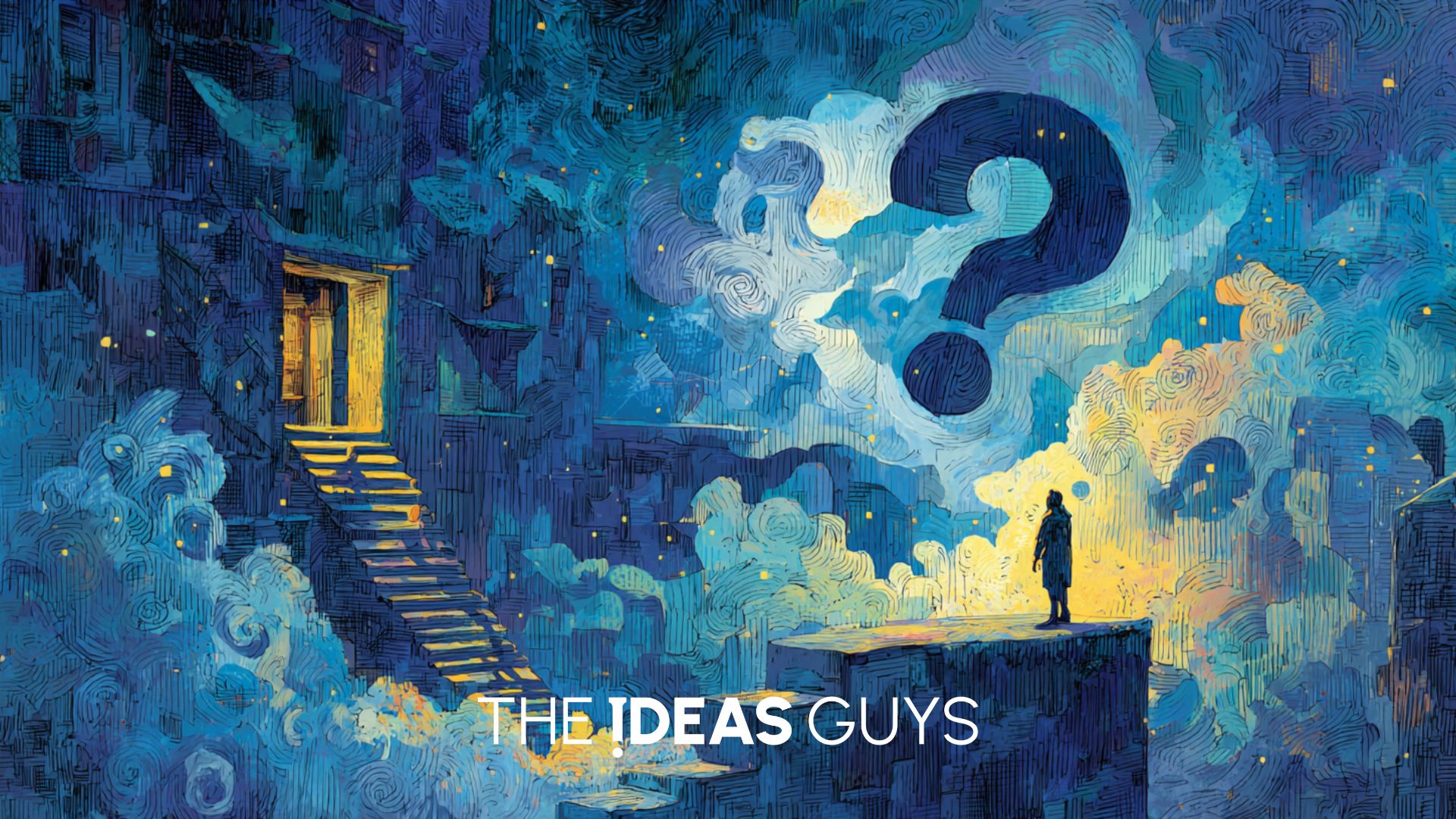
Most of us working in education and organisational leadership spend a disproportionate amount of time trying to answer questions. That's not a criticism, it's a structural reality. Strategy cycles demand conclusions. Inspection frameworks require evidence of outcomes. Boards want assurance. Line managers want reports. The machinery of institutional life runs on resolution, and anyone who slows it down to linger in uncertainty is, at best, a nuisance, and at worst, a liability.
What gets lost in this rush to closure is something harder to name, and harder still to defend in a budget meeting. You could call it possibility or call it imaginative range. You might even say it’s the genuine capacity to conceive of states of affairs that don't yet exist. Whatever the label, it is the precondition for any meaningful change and in most of the organisations I encounter, it is being quietly, systematically squeezed out.
This isn't a piece about brainstorming or blue-sky thinking or any of the other sanitised substitutes that organisations deploy when they want to appear open without actually being so. (I am acutely aware of the irony that many ‘real workers’ know that us external consultants have a set of code words and trite vocabulary like this which conveniently misses the points entirely!) This is a piece about what happens psychologically and philosophically when we treat the current state of things as the natural state of things and what it costs us when we do.
.jpg)
The box and what we put in it
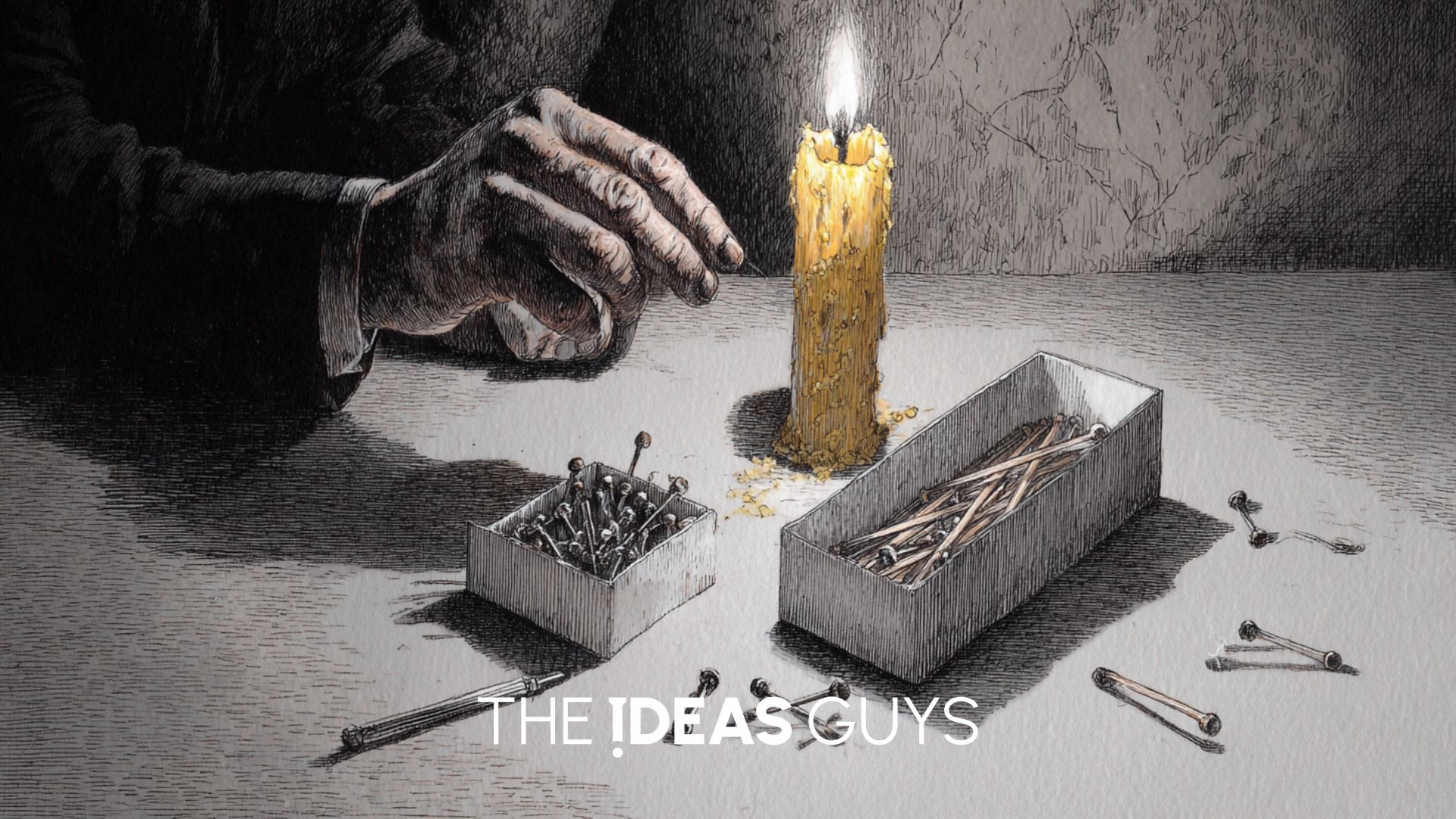
In 1935, the German Gestalt psychologist Karl Duncker ran what would become one of the most replicated experiments in cognitive psychology. He placed participants in a room with three objects: a candle, a box of pins, and a book of matches. Their task was to fix the candle to the wall so that wax would not drip onto the table below.
Most participants tried variations of the obvious: pinning the candle directly to the wall, or melting its base to create a seal. Almost none of them saw the solution, which was to empty the box, tack it to the wall, and use it as a shelf for the candle to stand on. The box was right there. The answer was right there. But because participants had encountered the box as a container, they couldn't perceive it as anything else.
Duncker called this functional fixedness - the cognitive tendency to see an object only in terms of its conventional purpose. What he had demonstrated, with elegant simplicity, was not stupidity. It was the predictable consequence of familiarity. The more you know what something is for, the harder it becomes to see what else it might be.
The implications of this extend well beyond the laboratory. Every institution, every curriculum, every leadership team carries its own version of the tack box. Be it objects, practices, structures or assumptions that have accumulated such a thick coating of conventional function that their alternative possibilities have become literally invisible, we stop asking whether the box might be a shelf, because the box has always held pins, and the pins are right there, and there's a meeting in ten minutes.
What Duncker identified in individuals, Ellen Langer later traced systematically through organisations and institutions. Langer, the Harvard social psychologist and author of Mindfulness, spent decades studying what she termed mindlessness, not inattention, but the automatic application of past learning to present situations. Her formulation of the problem was precise.
"Mindlessness is the application of yesterday's business solutions to today's problems." Ellen Langer
The mechanism is easy to follow. We learn something, such as a procedure, a framework, a way of categorising the world and we learn it under conditions that no longer apply. We then carry that learning forward unchanged, applying it on autopilot to new situations that may require something entirely different. The world shifts; our mental categories don't. We mistake the map for the territory, and we mistake the territory for permanent.
In schools and trusts and leadership teams, this plays out relentlessly. Not because the people involved are unimaginative, but because the systems they inhabit reward pattern-application over pattern-questioning. The five-year strategic plan, the accountability framework, the curriculum model handed down from above — all of these encode yesterday's thinking and present it as today's necessity. The result is an entire professional culture that has, in Langer's terms, learned not to notice.

Two modes, and what happens when you only use one
Jerome Bruner, the Harvard cognitive psychologist who shaped much of what we understand about learning and narrative, who we have mentioned a few times before, spent the better part of his career trying to explain why human minds work the way they do. In Actual Minds, Possible Worlds, he drew a distinction that I think leaders would do well to take seriously.
Bruner described two fundamentally different modes of thought. The first he called the logico-scientific mode: analytical, sequential, concerned with argument, verification, and truth in the formal sense. This is the mode that writes reports, constructs policy frameworks, and runs inspection regimes. It is essential, and it is the mode that institutions have almost entirely colonised as their operating standard.
The second mode he called narrative. Where logico-scientific thought seeks truth through formal proof, narrative thought seeks meaning through story, context, intention, and what Bruner memorably described as "the vicissitudes of human intention" - the way that plans collide with reality, that purposes evolve, that meaning accumulates through experience rather than deduction. Narrative thought is where possibility lives. It is where we conceive of worlds that don't yet exist and ask what it might mean to inhabit them.
Bruner's point, and it is not a soft one, was that these modes are genuinely different and cannot be reduced to each other. You cannot get at what narrative thought offers by being more rigorous in your logico-scientific thinking. They operate on different principles and produce different kinds of knowledge. Both are necessary. The trouble is that one has been granted institutional legitimacy while the other has been quietly demoted to the status of indulgence.
The practical consequence is that when organisations make decisions, evaluate proposals, or think about the future, they reach almost exclusively for logico-scientific tools. Data. Evidence. Benchmarks. Projections. All of which are valuable. But none of which can tell you what has never yet been tried, or why it might matter, or what kind of world would have to exist for it to make sense. That requires the other mode; the one that most senior leaders have been professionally trained to suppress.
Bruner put it plainly,
"Being able to 'go beyond the information given' to 'figure things out' is one of the few untarnishable joys of life." Jerome Bruner
The emphasis on joy is not incidental. It is a signal that something is at stake beyond efficiency. The capacity to exceed what the data tells you is not an intellectual luxury; it is the very mechanism through which new possibilities come into view.
What we do to the question
The more interesting problem is not that organisations avoid possibility, it is that they have developed highly sophisticated ways of appearing to embrace it while systematically defusing it. The language is everywhere. Aspiration. Vision. Transformation. These words float through strategy documents and staff briefings like bright balloons, doing the aesthetic work of possibility without any of the structural commitment. They are stuck on wall decals everywhere as everyone that alone will permeate the organisational culture. Meanwhile, the conditions that genuine possibility-thinking requires - time to think without a deliverable, permission to question the premises, tolerance for the discomfort of not-yet-knowing - remain largely absent.
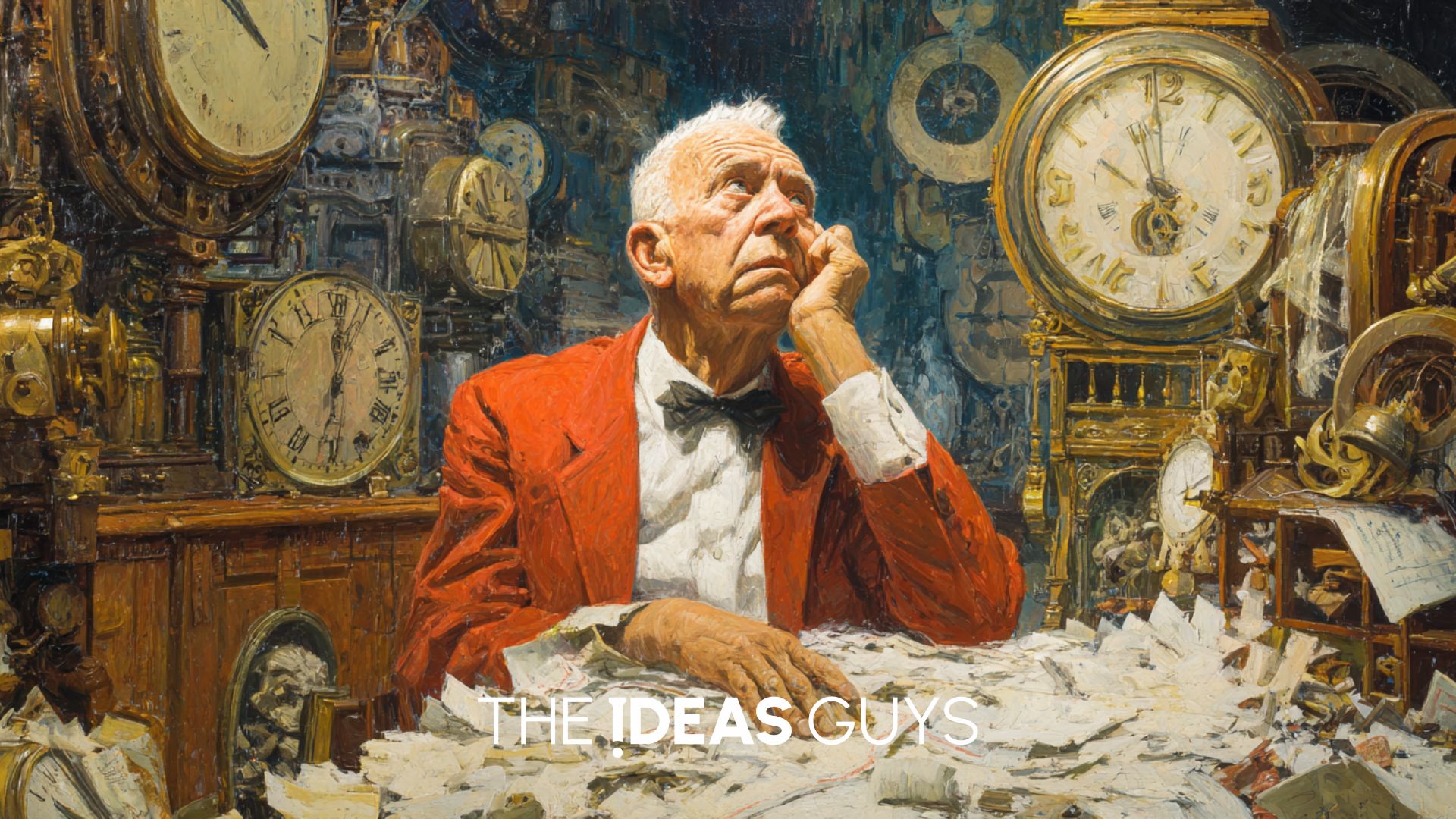
This is not cynicism. It is a structural observation. Most people in positions of leadership are working under genuine pressure and with genuine goodwill. The problem is that the architecture of their organisations is built to produce certainty, not to cultivate uncertainty. Uncertainty is, by institutional logic, a problem to be managed rather than a condition to be inhabited.
Which brings me to a poem, or rather, to a letter.
In 1903, the Austro-German poet Rainer Maria Rilke wrote a series of letters to a young cadet named Franz Xaver Kappus, who had sent Rilke his poetry and asked for advice. The resulting correspondence, later published as Letters to a Young Poet, contains what I regard as one of the most practically useful pieces of counsel ever put in writing, particularly for anyone who works in conditions of genuine uncertainty, which, in 2026, is most of us:
"Be patient toward all that is unsolved in your heart and try to love the questions themselves, like locked rooms and like books that are written in a very foreign tongue. Do not now seek the answers, which cannot be given you because you would not be able to live them. And the point is, to live everything. Live the questions now." Rainer Maria Rilke
It is worth pausing on that phrase: you would not be able to live them. Rilke is not saying the answers don't exist. He is saying something more interesting - that there is a temporal and experiential dimension to understanding, and that forcing resolution before you are ready for it produces answers you cannot actually inhabit. They sit in the strategy document. They appear in the action plan. But they don't become real, because the conditions for genuinely living them haven't yet been met.
Regular readers will know I've used Rilke before; it would be dishonest to pretend otherwise. But I return to him here because the question at the centre of this piece is one his thinking is particularly equipped to illuminate. This isn't about appreciating ambiguity for its own sake. It is about recognising that some problems require us to live inside them before we can understand what resolution would even look like.
Education leaders will know this feeling, even if the language of strategy discourages them from naming it. You are three years into an improvement journey, and the data is moving in the right direction, and yet something feels unfinished, not because you haven't worked hard enough, but because the question beneath the question hasn't been fully articulated yet. You are living the question. The mistake is treating that as a failure state.
The invention of the possible
In 1969, the Open University opened its doors, or rather, opened them to people who, for reasons of class, geography, work, disability, or family circumstance, had never been permitted to walk through the doors that mattered. The idea had been dismissed as eccentric, unworkable, or faintly embarrassing by significant portions of the academic establishment. The Sunday Telegraph called it "a blithering nonsense." Senior figures at established universities warned it would devalue higher education credentials.
What the critics were doing, with the box of pins right in front of them, was exhibiting functional fixedness. A university was a place with buildings, timetables, lecture halls, and entrance requirements. You couldn't have one without those things, because a university was those things. The function was fixed.
What the OU's founders - and Jennie Lee, the arts minister who drove it into existence through considerable political resistance - understood was that the function was not fixed. A university is a mechanism for delivering serious intellectual engagement to people capable of serious intellectual thought. The delivery method is not the definition. The box is not the shelf.
By any measure, it became one of the most significant innovations in twentieth-century British education. But it required someone to ask a question that the existing institutional logic made nearly unanswerable: what would higher education look like if we designed it for the people it currently excludes?
That is a possibility-question. It cannot be answered by analysing existing data, because the people being asked about are precisely the people not represented in existing data. It requires the narrative mode — the ability to conceive of a world that doesn't yet exist and hold that conception long enough to test whether it might be made real. It requires living the question before you can answer it.
This pattern repeats wherever genuine institutional innovation has occurred. Not incremental improvement — there is plenty of that — but the kind of change that reconfigures what an institution is for. In every case, someone resisted the pressure to resolve the question prematurely. Someone held it open long enough for the answer to become visible.
Possibility is not a personality trait
There is a comfortable story that organisations tell about this. Some people are visionaries and some aren't. Some organisations are innovative by nature and some are built for delivery. The right people will ask the right questions, and the rest of us can focus on execution. This is not just wrong. It is strategically convenient for institutions that don't want to do the hard work of creating conditions in which possibility-thinking can actually occur. If imaginative range is a personality trait, then its absence is not an organisational failure; it's just bad luck with the talent pipeline.
Bruner's work makes the counter-argument clearly. The narrative mode is not a gift distributed unevenly at birth. It is a cognitive capacity, present in all of us, that either gets exercised or doesn't depending on the conditions in which we operate. Children are extraordinary possibility-thinkers - five-year-olds, as Duncker's successors found, are largely immune to functional fixedness, because they haven't yet been trained into fixed categories. The capacity narrows with age not because it atrophies naturally, but because the institutions through which we pass - schools, universities, workplaces - systematically reward the logico-scientific mode and deprioritise the narrative one.
Langer's research sharpens this point. In one strand of her work, she found that even the framing of information affects whether people perceive flexibility or constraint. When information is presented conditionally ("this could be an example of X") rather than unconditionally ("this is an example of X"), people retain significantly more cognitive flexibility in how they subsequently apply it. The difference in outcome was not driven by intelligence or personality. It was driven by the structure of the instruction.
This matters enormously for anyone in a leadership or teaching role. Every time you present a framework, a policy, or a way of working as fixed fact rather than working hypothesis, you are, with the best of intentions, contributing to functional fixedness in the people around you. You are filling the box of pins and making it harder for people to find different ways of working. The alternative is not to withhold certainty where certainty genuinely exists, but to be scrupulous about distinguishing the things that are genuinely settled from the things that merely feel that way because no one has recently questioned them.
Creating the conditions for possibility-thinking is not a matter of personality. It is a matter of deliberate structural choice: how questions are framed, whether uncertainty is treated as a problem or a resource, whether not-yet-knowing carries status or shame. These are design decisions, and they can be made differently.
What living the question actually requires
None of this is as passive as it might sound. Rilke's injunction to "live the questions" has sometimes been co-opted into a kind of easy tolerance for vagueness, a permission slip to avoid difficult thinking. That is a misreading.
Living a question, in the sense that matters here, is demanding. It requires you to hold two things simultaneously: genuine uncertainty about the answer, and genuine commitment to the enquiry. It is the difference between not knowing where you're going and drifting, and not knowing where you're going and navigating. One is abdication; the other is a particular kind of rigour.
William Blake, writing more than a century before Rilke, identified the psychological mechanism that blocks this: the narrowing of perception through habit and certainty. In The Marriage of Heaven and Hell written around 1790, he wrote,
"If the doors of perception were cleansed every thing would appear to man as it is, Infinite. For man has closed himself up, till he sees all things thro' narrow chinks of his cavern." William Blake
It is Plato's cave, dressed in different clothes; the argument that what we take to be reality is a restriction, not a revelation.
The organisational version of Blake's cavern is the accumulated certainty of people who have stopped asking whether their categories are adequate to the situations they face. The strategic plan becomes the cave wall. The school improvement framework becomes the cave wall. The way we've always done it becomes the cave wall. What's projected on it looks real, because it's all we can see.
The question - the genuine, unresolved, productive question - is what exists outside it.
That is not a comfortable place to occupy, and it would be dishonest to suggest otherwise. Living the question means tolerating the discomfort of not knowing in front of people who expect you to know. It means resisting the pressure to close things down before they're ready to be closed. It means, in Langer's terms, staying mindful, which is actively noticing, rather than automatically applying in conditions that are specifically structured to reward automatic application.
It also means accepting that some questions will not resolve on your timetable. This is the part that institutions find hardest. The five-year strategic plan cannot accommodate an answer that takes seven years to become visible. The annual performance review cannot accommodate a development whose value only becomes legible in retrospect. The architecture of institutional accountability is, at its root, an architecture of premature closure and navigating it while preserving the genuine openness that possibility requires is one of the hardest things that thoughtful leaders actually do.
Key Takeaways
1. Functional fixedness is institutional, not just individual. Duncker demonstrated in 1935 that familiarity with an object's conventional use actively prevents people from seeing its alternative possibilities. In organisations, this applies to practices, structures, and assumptions that have been in place long enough to feel like natural law. The box is not the shelf but you have to notice that you're holding a box.
2. The logico-scientific mode cannot generate what the narrative mode can. Bruner's distinction between these two cognitive modes is not academic tidiness. It has direct implications for how organisations make decisions. Data and evidence can tell you what has happened and what tends to follow. They cannot tell you what has never yet been tried, or whether it matters. That requires a different kind of thinking, one that most institutional processes actively suppress.
3. Mindlessness is structural, not personal. Langer's work shows that the automatic application of past learning to present situations is a feature of how organisations are designed, not simply a failure of individual attention. Framing matters: presenting information conditionally rather than unconditionally preserves the cognitive flexibility needed for genuine possibility-thinking.
4. Possibility-thinking is not a talent; it is a condition. The evidence is clear that children begin with greater imaginative range than adults, and that this narrows through institutional experience rather than natural development. This means it is recoverable. It means that creating the right structural conditions with things like psychological safety, genuine optionality, tolerance of productive ambiguity is a leadership task, not a talent-spotting exercise.
5. Premature closure is the dominant failure mode. Organisations are not, in the main, unimaginative. They are impatient. The pressure to resolve questions before the conditions for genuine resolution exist is ubiquitous, and it produces plans that are technically coherent but experientially inert. The answer exists in the document; it hasn't yet been lived.
6. Living the question is an active discipline, not a passive state. Rilke's advice to inhabit unresolved questions rather than force their resolution is often misread as an endorsement of drift. It isn't. It is a description of the particular rigour required to hold genuine uncertainty without either resolving it artificially or abandoning the enquiry. This is a form of intellectual and emotional stamina, and it can be developed.
7. The Open University test. When you encounter a constraint that seems definitional - this is how education works, this is what leadership looks like, this is what's possible here - ask whether you're describing a genuine limit or a tack box. The people who opened the OU didn't have better data than their critics. They had a different relationship to the question.
The irony of writing about living the question is that the piece itself keeps wanting to answer something. To land. To resolve. That pressure is worth noticing and it is exactly the institutional reflex this article has been describing, playing out in real time. So let this end without a tidy conclusion, in the spirit of what it's actually arguing: the question worth pursuing is probably the one you already know you've been avoiding. You don't need a framework for it. You need the nerve to leave it open a little longer.
Further Reading
Discover more interesting articles here.