.png)
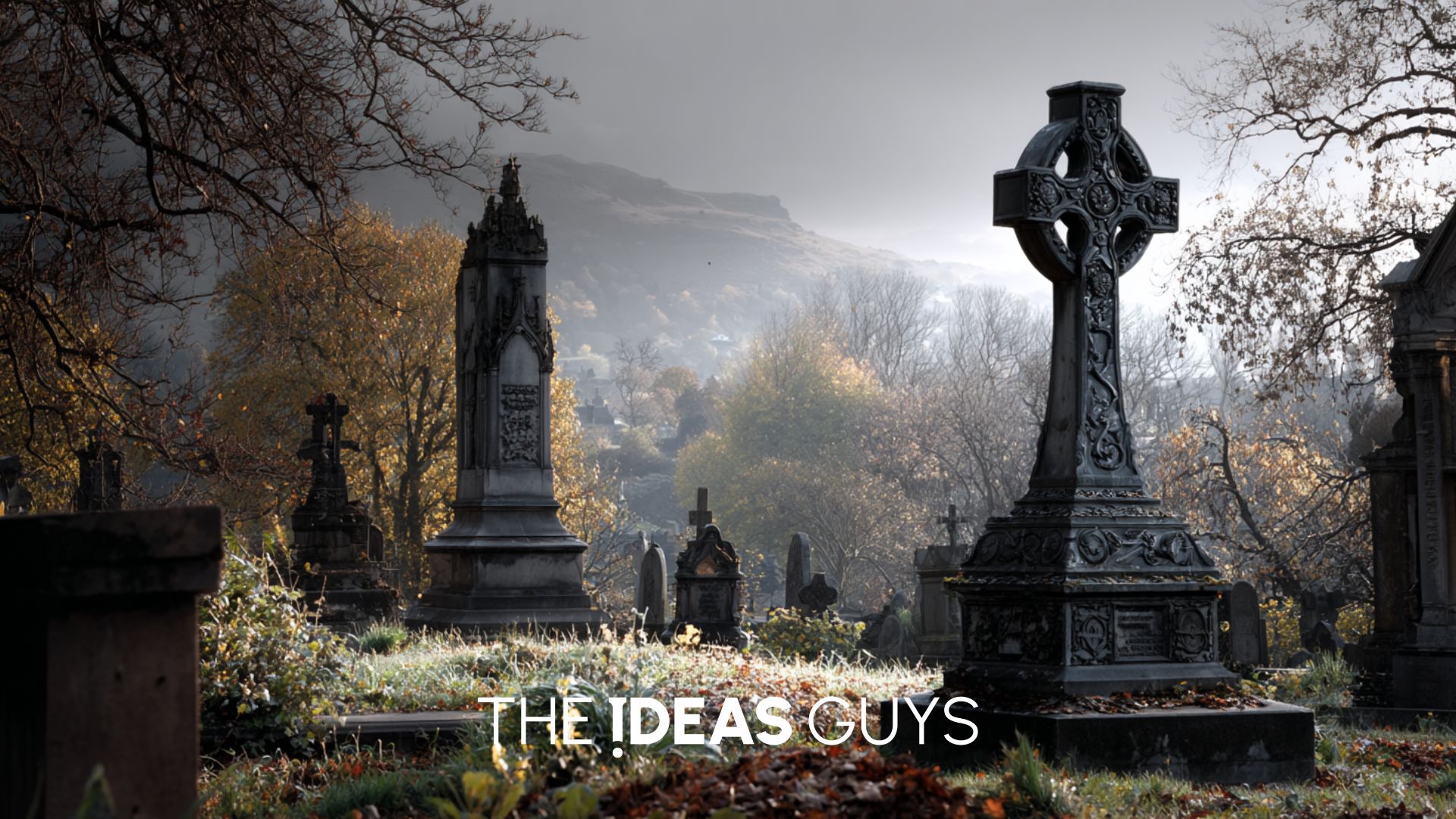
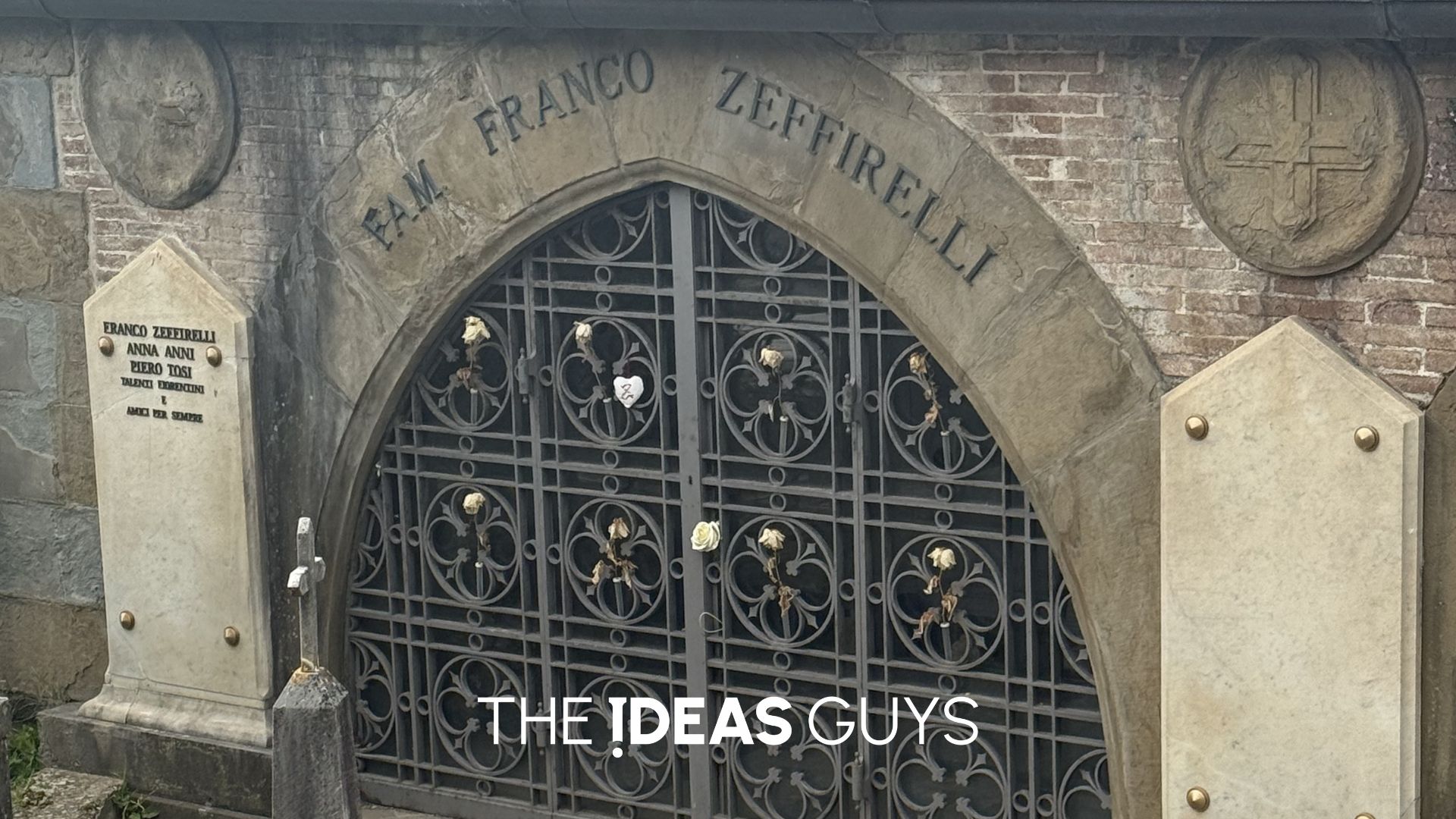
There is a graveyard in Florence where the stones tell you everything you already know and have spent most of your adult life avoiding. We walked through it on a warm afternoon, the kind of afternoon where it feels mildly absurd to be thinking about death at all. And yet there they were. Name after name. Date after date. The arithmetic of a life reduced to two numbers and a dash. One stone stopped me entirely. A child. Three months old. A few rows along, a woman who had lived to one hundred and eight. Same city. Same stone. Same dash. Different everything.
I have written before - in FRiDEAS #49 - about memento mori as a concept. The Stoic practice of holding death in mind not as morbidity but as a clarifying discipline. That piece was about the philosophy. This one is about what happens when the philosophy becomes material. When you stop reading about finitude and stand inside it.
Because there is a significant difference between the two, and I am not sure we talk about it enough.
The Comfortable Distance We Keep
Ernest Becker won the Pulitzer Prize in 1974 for a book called The Denial of Death, published the year he died of cancer. His central argument was uncomfortable then and remains uncomfortable now: that the majority of human activity - the building of careers, legacies, institutions, ideologies - is, at its root, a defence mechanism against the terror of knowing we will die. We construct what Becker called “immortality projects”: endeavours large enough to feel as though they outlast us. Organisations chase impact. Leaders chase legacy. Academics chase citation counts. We stay busy. We stay very, very busy.
“The irony of man's condition is that the deepest need is to be free of the anxiety of death and annihilation; but it is life itself which awakens it, and so we must shrink from being fully alive.” Ernest Becker
CS Lewis wrote an equally challenging read, A Grief Observed, about watching his wife, Joy, die of cancer. (His other brilliant part autobiography, Surprised by Joy, is a wonderful and clever literary complement to the joy he found in finding faith - and his wife!).
None of this chasing is cynical, exactly. It produces genuinely valuable things. But it also means that most of us are operating at a comfortable distance from the fact that sits underneath everything else. We know, abstractly, that we will die. We do not, for the most part, feel it.
“We were promised sufferings. They were part of the program. We were even told, 'Blessed are they that mourn,' and I accept it. I've got nothing that I hadn't bargained for. Of course it is different when the thing happens to oneself, not to others, and in reality, not imagination.” CS Lewis
The French historian Philippe Ariès spent decades studying how Western cultures have related to death across the centuries. His distinction between what he called the “tame death” of pre-modern Europe - public, communal, expected, discussed openly - and the “forbidden death” of modernity is striking. Death moved from the bedroom to the hospital, from the community to the professional, from something spoken about to something managed. We did not become less mortal. We became better at not noticing.
That graveyard in Florence was a small rupture in that arrangement.
Pompeii and the Shape of a Last Moment
A few days later, we went to Pompeii.
If you have not been, the plaster casts are not what you expect. They are not sculptures or reconstructions or artistic interpretations. They are the negative space left by human bodies in hardened volcanic ash, filled with plaster by the archaeologist Giuseppe Fiorelli in the 1860s. You are looking at the exact shape of a person’s last moment. The position of their arms. The curve of their back. The way they fell, or crouched, or reached for someone.
It is harrowing in a way that is difficult to prepare for, even when you know it is coming. We had chosen to go. We stood in front of those casts deliberately. And it still cut through in a way that reading about Pompeii had never managed across years of knowing about it.

This is the thing that academic treatments of mortality tend to understate: the medium matters. There is a category difference between knowing something and being confronted by it in three dimensions, at eye level, without the option to close the tab or set the book down. Pompeii does not allow you to maintain the comfortable distance. The distance collapses, and something shifts in its place.
Marcus Aurelius returned to this in the Meditations repeatedly, not as a literary device but as a genuine practice. “Confine yourself to the present,” he wrote. And elsewhere:
“Do not indulge in dreams of what you have not, but count the exact tally of the blessings you do have, and then thankfully remember how eagerly you would have longed for them, if they were not already yours.” Marcus Aurelius
He was not performing wisdom. He was doing the daily work of keeping death present so that life stayed legible. Epictetus, whose influence on Aurelius was direct and significant, put it with characteristic bluntness in the Enchiridion:
“Never say about anything, I have lost it; but, I have returned it.” Epictetus
What you have was never entirely yours to lose.
Ryan Holiday has brought both men into contemporary circulation, most directly in his work on the Stoics. His point - which is also theirs - is that memento mori was never meant to be decorative. The skull on the desk, the death’s-head ring, the daily recitation of “you are mortal” were not Gothic affectations. They were cognitive tools for keeping the mind honest about what actually matters, today, not in some imagined future when circumstances improve and the calendar clears.

Standing in front of a plaster cast in Pompeii is a more confrontational version of the same practice. It is hard to think about your inbox in there.
What Sits Between the Dates
The three-month-old child and the one-hundred-and-eight-year-old woman in Florence share something that is easily missed if you are thinking about the difference in their ages: neither of them had any say in either date. The date of birth and the date of death were not within their control. What sat between those dates - how that time was inhabited, what was made of it, how present they were to it - that was the only variable.
Epictetus built his entire philosophy around this distinction. The prohairesis, the faculty of choice or the will, is the only thing genuinely within our control. Everything else, including when we arrive and when we depart, belongs to what he called ta ektos, external things. This is not a counsel of passivity. It is the opposite. If the dates are fixed, the only question worth serious attention is what happens in the dash between them.
The problem, as Becker identified, is that we tend to spend the dash planning for a future that will vindicate all the present effort, rather than inhabiting the present with any real attention. We defer. We accumulate. We optimise for outcomes that are always just around the corner. The graveyard does not care about any of that. The stone does not record what you were planning to do. Saving for a rainy day means nothing when the dash ends.
There is a related idea in Iris Murdoch’s moral philosophy that I find genuinely useful here. Murdoch wrote about what she called “unselfing” - moments when the anxious, self-referential ego temporarily recedes because something genuinely other demands your full attention. Her own example was a kestrel glimpsed through a window while she was “obsessed by a resentment.” The bird was so fully itself, so present, that her own mental noise quietened without effort. She was not improving herself. Something just opened.
A plaster cast of a man who died in AD 79 can do the same thing, if you let it. The self with its projects and anxieties and carefully managed legacy becomes, for a moment, the wrong size for the situation. What you are left with is something simpler: a person, alive, aware of time, responsible for what they do with it.

When Mortality Awareness Goes Wrong
It is worth being honest about the complications here, because the argument that confronting death makes you a better leader or a wiser person is not straightforwardly true.
Terror Management Theory, developed by the social psychologists Greenberg, Pyszczynski and Solomon, building on Becker, suggests that mortality salience does not automatically produce clarity. When death is made salient in the wrong conditions, people become more defensive, more tribal, more rigidly attached to existing identities. They cling harder to their worldview. They become less open, not more. The mechanism is defensive: confronting mortality triggers anxiety, and the quickest way to manage that anxiety is to invest more heavily in whatever cultural, ideological, professional structures already give you a sense of meaning and permanence.
In short, when the sh!t hits the fan, we cling to what and who we know.
This is why the quality of the encounter matters. A news headline about a plane crash will, research suggests, make you marginally more conservative in your judgments and more hostile to people who are different from you. Two hours in a Florentine graveyard, moving slowly through the names and the dates, chosen deliberately, experienced with people you love - that does something different. The difference is not incidental. It is structural.
Slow, material, intentional engagement with mortality seems to bypass the defensive response and access something more genuinely reflective. The key word is slow. Our culture is exceptionally good at giving us mortality in fast, alarming doses - breaking news, social media tragedy, scrollable grief. It is much less practised at giving us the unhurried, three-dimensional encounter that actually produces change. How good would Sky News be if it had some good news for once?
The Stoics understood this, which is why the practice was daily and deliberate rather than reactive. You did not wait to be frightened into awareness. You chose to cultivate it, carefully, as a discipline.
What Changes, Practically
So what does any of this actually mean for how we work and lead? The most honest answer is that it is less about technique and more about orientation. Becker’s immortality projects - the legacy-chasing, the visibility-seeking, the anxious accumulation of proof that we mattered - do not disappear because you have walked through a graveyard or studied some ancient ruins. But they become slightly more visible. You can start to notice when you are making a decision from genuine conviction versus when you are making it from the need to be seen making it. That is a more useful distinction than most leadership frameworks offer.
It also changes your relationship with other people’s time. If you have genuinely sat with the finite nature of your own existence, the cavalier use of other people’s hours becomes harder to justify. The meeting that should have been an email. The endless revision cycle of a design. The culture of performative availability - that always on culture I have railed against but still find myself battling. These are not just inefficiencies. They are, in a quiet way, a theft. And the graveyard makes that legible in a way that productivity workshops do not.
There is also something to be said about the relief of it. One of the stranger effects of a serious encounter with mortality is that it simplifies things. Not in a morbid or nihilistic direction - quite the reverse. When you have genuinely felt the weight of finite time, a significant amount of the noise that normally fills professional life reveals itself as optional. The rivalry that seemed important. The perception management. The things you were tolerating because you assumed there would be time to address them later. There will not always be time. There is time now.
Marcus Aurelius kept returning to one question throughout the Meditations: of this moment, this decision, this interaction - is this necessary? Not useful in some distant strategic sense, but necessary, right now, given that time is the only non-renewable resource in play. It is a useful question. It is also, if taken seriously, a fairly ruthless one.
Key Takeaways
1. The difference between knowing and encountering is not trivial. Reading about mortality and standing inside a material confrontation with it are categorically different experiences. The philosophy is the map. The encounter is the territory. Both have value, but they produce different things in you, and only one of them cuts through the defences we spend our professional lives constructing.
2. The dash between the dates is the only variable. The date of birth and the date of death are not negotiable. Epictetus was clear on this: the only thing genuinely within your control is how you engage with what you have been given. That reframing is not comforting in a soft sense. It is clarifying in a sharp one. It places responsibility exactly where it belongs.
3. Mortality awareness can go wrong and so the conditions matter. Terror Management Theory shows that confronting death in the wrong conditions produces defensiveness, not wisdom. Fast, alarming, reactive encounters with mortality tend to make us smaller. Slow, chosen, material encounters tend to make us larger. This is an argument for designing the encounter deliberately rather than leaving it to chance.
4. The immortality project is worth identifying in yourself. Becker’s insight is not an accusation. It is a diagnostic. Most of us have one - the long-standing project, the legacy, the professional identity that functions partly as a hedge against meaninglessness. There is nothing wrong with ambitious work. The question is whether it is in service of something genuinely valued, or in service of the anxiety it is designed to suppress.
5. Other people’s time is finite too. This one tends to land differently once you have sat with your own finitude. The casual consumption of other people’s hours, in organisations, in leadership, in any relationship where you hold some degree of power over how time is spent, looks different when you have genuinely felt the weight of what time is. It does not require a policy. It requires an orientation.
The graveyard in Florence is still there. The stone with three months on it. The stone with 108 years. The same dash, carved at different lengths metaphorically, meaning the same thing. You already know you are going to die. The question is whether that knowledge lives in you at the level where it can actually do any work, or whether it sits in the part of the mind reserved for things that are true but inconvenient. Pompeii, if nothing else, moves it from the second place to the first. The rest is up to you.
Further Reading
Discover more interesting articles here.