.png)
There is a particular kind of organisational dysfunction that rarely gets named. It isn’t incompetence. It isn’t poor strategy. It isn’t even bad leadership. It is something more structural and, in many ways, more insidious: the systematic severing of connections.
We have built institutions - schools, trusts, businesses, public services - that are architecturally hostile to joined-up thinking. Departments operate in sealed units. Subjects are parcelled into timetable slots with no mandate to speak to each other. Strategy documents emerge from leadership retreats with no visible thread to the classroom door. And the people tasked with solving complex, interconnected problems are, by design, discouraged from looking sideways.
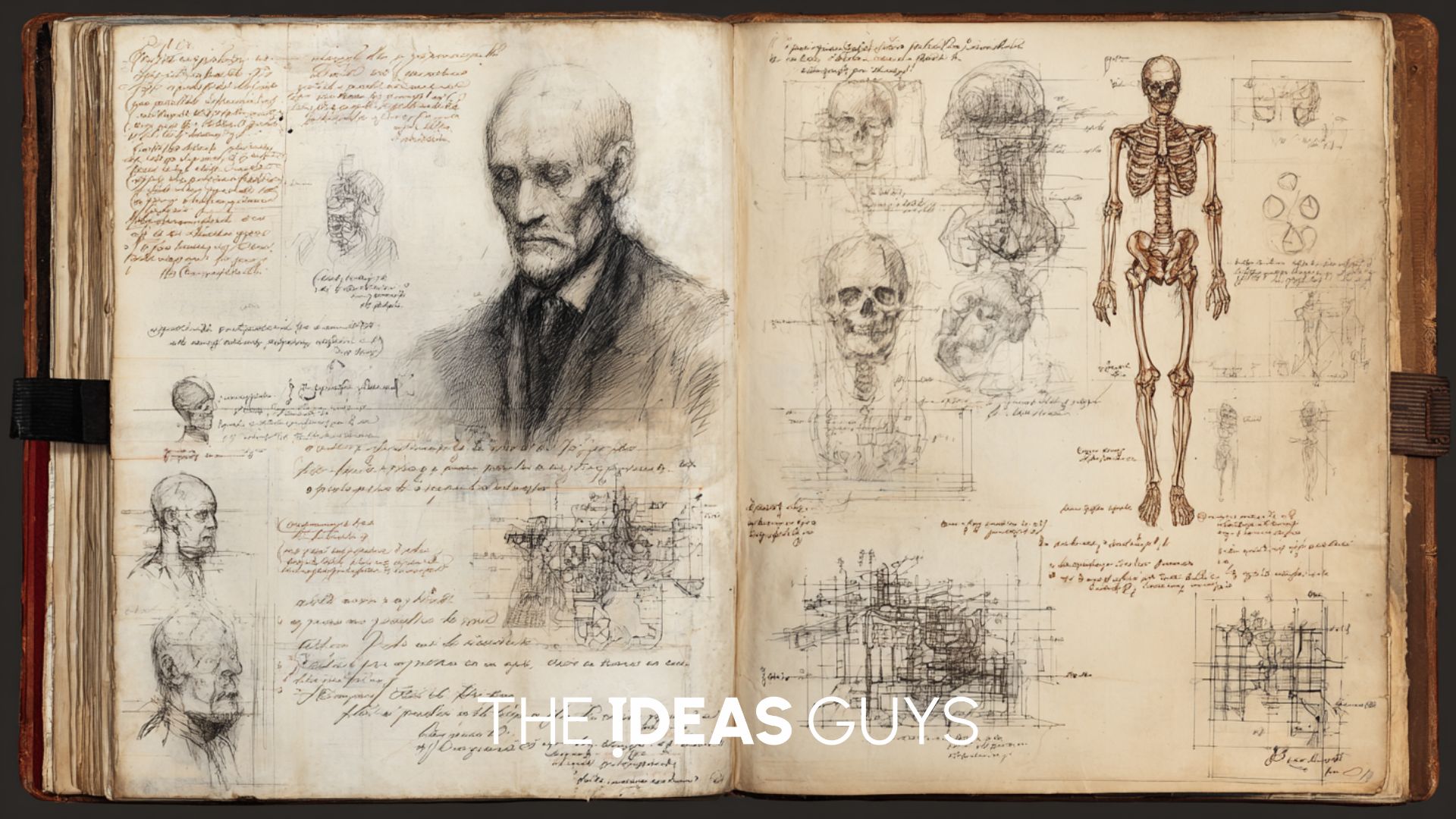
Leonardo da Vinci wrote in his notebooks,
“Realise that everything connects to everything else.” Leonardo da Vinci
It is one of those lines that sounds obvious until you sit with it long enough. Then it starts to feel like an accusation.
This is not a piece about Da Vinci’s genius - that particular well has been drawn from too many times in too many keynote presentations. It is a piece about what we lose when we amputate the connections between disciplines, between departments, between people and ideas. And it is about why the ability to think across boundaries is not a soft skill or a personality trait reserved for certain creative types - it is a strategic capability, and most of our organisations are actively eroding it.

The silo was a design choice
It is worth being clear about something: the silo did not happen by accident. It was built. The intellectual foundations were laid in the late nineteenth century, when the division of labour - already well-established in industrial production - began to colonise how we organised knowledge itself. Academic disciplines hardened into territories with defended borders. Schools adopted the factory model not as metaphor but as operating principle: separate inputs, separate processes, separate outputs. Organisations followed suit, aligning structure with function rather than with the flow of problems.
I wrote in an Instagram post recently about Horace Mann, the Father of American Education who is responsible for much of the conveyor belt processing of modern schools. His belief and behaviour didn’t correlate - he built the modern school system yet homeschooled his own children!
The sociologist Émile Durkheim, writing in The Division of Labour in Society way back in 1893, understood the productive power of specialisation but also warned about its costs. His concept of anomie - a condition of disconnection, of norms breaking down when social integration weakens - was as much a warning about fragmenting institutions as it was about fragmenting societies. When people lose their sense of relationship to the whole, he argued, something fundamental deteriorates. We have spent over a century proving him right.
“Man is a moral being, only because he lives in society. Let all social life disappear and morality will disappear with it.” Émile Durkheim
In education, this fragmentation is almost total. The secondary school timetable is a monument to the belief that biology and poetry have nothing to say to each other. That a history lesson could not be enriched by a conversation with the geography department. That the maths teacher and the music teacher inhabit different intellectual universes. These divisions are not pedagogically inevitable - they are structural choices, and they transmit values. They tell young people, every single day, that knowledge comes in sealed containers.
In organisations, the same logic prevails. The strategic planning team works from a set of assumptions the operational people could demolish in an afternoon - if they were ever in the same room. The finance function applies pressure that the HR function absorbs without the two ever developing a shared vocabulary. The result, as the cyberneticist Stafford Beer put it, is organisations optimised for their parts that are suboptimal as wholes.
To hark back to Isaiah Berlin’s famous distinction between the fox and the hedgehog - “the fox knows many things; the hedgehog knows one big thing” - it becomes clear that our institutions, almost without exception, are built for hedgehogs. Deep expertise in a single domain is what gets hired, promoted, and recognised. The fox - the thinker who draws connections across fields, who thinks in analogies and transfers - is tolerated at best, managed out at worst.
.jpg)
The problem is that our most pressing problems are deeply foxy (I had to use that word!) Professor Keith Grint calls them “wicked problems”. Climate, inequality, mental health, educational disadvantage, technological disruption - none of these yield to single-discipline thinking. They require exactly what our structures discourage.
What connective thinking actually is
Before we can argue for it, we need to be precise about what connective thinking is - because it is not simply “being curious” or “reading widely,” and conflating it with those vaguer notions makes it easier to dismiss.
The philosopher and writer Arthur Koestler gave us probably the most rigorous account in The Act of Creation, with his concept of bisociation. Where ordinary thinking operates within a single “matrix” - a fixed set of rules, associations, and logic - creative insight happens at the collision point between two habitually incompatible matrices. The punchline lands because two separate logical chains suddenly connect. The scientific discovery happens because a pattern from one domain illuminates a structure in another. Koestler was describing not a personality type but a cognitive event. The question is whether we create conditions for it to occur.
“Language can become a screen which stands between the thinker and reality. This is the reason why true creativity often starts where language ends.” Arthur Koestler
Gregory Bateson, the anthropologist and cyberneticist, pressed further. In Mind and Nature: A Necessary Unity, Bateson argued that the pattern that connects all living things is not a metaphor or a sentiment - it is a structural fact. The same principles of recursion, feedback, and self-organisation appear in the development of an embryo, the grammar of a language, the evolution of a species. To study any one of these in isolation, he argued, is to misunderstand all of them.
“The major problems in the world are the result of the difference between how nature works and the way people think.” Gregory Bateson
This is not a mystical position. It has precise empirical support. Research in cognitive neuroscience - particularly work on what is called the default mode network, the brain’s activity during unfocused rest and mind-wandering - consistently shows that novel connections are generated not when we are concentrating narrowly but when our attention is allowed to range across stored knowledge. The act of connection is neurologically different from the act of retrieval. It requires a different kind of cognitive space.
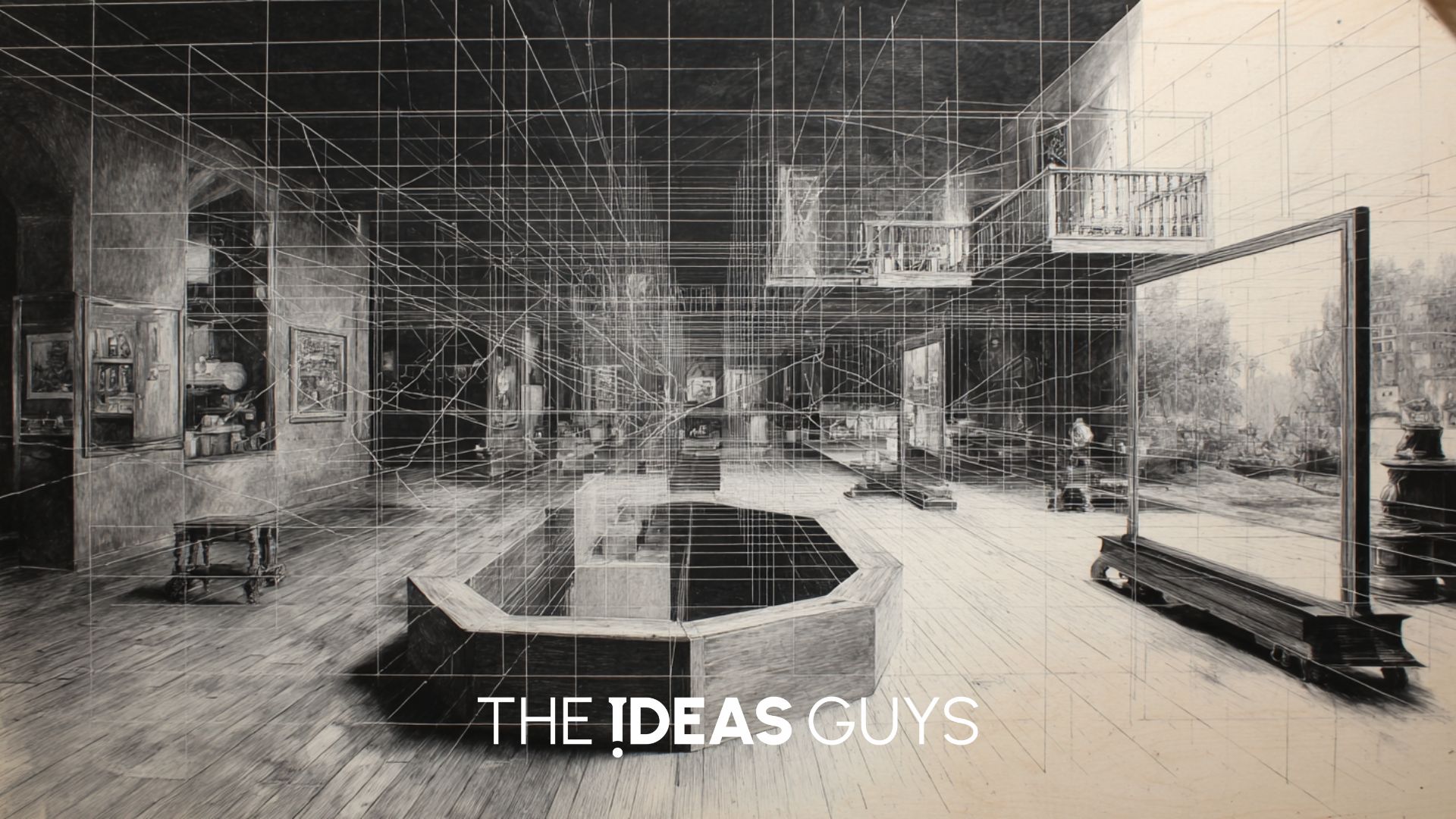
Da Vinci understood this intuitively, which is why his notebooks read the way they do. The same page might contain notes on hydraulics, a study of a bird’s wing, a sketch for a theatrical costume, and an observation about the movement of water. This was not dilettantism (a great word, by the way!). It was a systematic method. His biographers note his concept of sfumato - the deliberate blurring of edges, the refusal of false precision - which operated not just as an aesthetic technique in his painting but as an epistemological stance. He genuinely did not believe that a boundary existed between what the wing of a bird could teach him and what it meant for human flight. He was right. And the institutions we have built since would have found him a deeply inconvenient employee.
Aristotle’s concept of analogia - reasoning by structural resemblance across domains - underpins all of this. When we notice that the spread of a rumour through a school follows the same mathematical logic as the spread of an epidemic through a population, we have not made a clever observation. We have gained access to a body of modelling tools, intervention strategies, and predictive frameworks developed in epidemiology that are directly applicable to organisational behaviour. Connection is not decoration. It is leverage.
Where it breaks down - and why

The structural mechanisms by which connective thinking gets suppressed are worth naming specifically, because naming them is the first step to dismantling them.
In secondary education, the problem is embedded in accountability architecture. Ofsted’s or ISI’s inspection frameworks, for all their iterations, continue to evaluate subjects as discrete entities. Subject-level outcomes are measured, subject-specific pedagogy is discussed, subject expertise is prized in recruitment. There is almost no formal mechanism by which cross-curricular coherence is assessed, rewarded, or even consistently defined. Teachers who want to build genuine connections between subjects are operating against the structural grain - doing extra work for no formal recognition, often in the margins of a timetable that actively works against them.
In multi-academy trusts, a different fragmentation occurs. Vertical accountability structures - the line from classroom teacher to head of department to principal to trust executive - are comparatively well-developed. Horizontal connection - the science teacher at one school talking substantively to the science teacher at another, or the pastoral team sharing what it knows with the curriculum team - is rarely designed in. It happens, when it happens, because of individual relationships and personal goodwill. That is not a system. It is luck wearing the costume of collaboration.
At leadership level, the problem often manifests as a chronic narrowness of intellectual diet. There is nothing wrong with reading education research. The problem is when it is the only reading. A school leader who has never read anything about philosophy, organisational psychology, evolutionary biology, or economic history is working with an impoverished set of models. The solutions to educational problems rarely announce themselves from within education literature alone. Comprehensive schools that improved their exclusion rates by redesigning physical spaces drew on architecture and urban sociology. Schools that transformed reading outcomes through structured dialogue drew on linguistics and philosophy of mind. The raw material was outside the usual reading list.
There is a psychological dimension to this too. The cognitive scientist Philip Johnson-Laird’s work on mental models shows that we reason primarily from internal representations of the world, not from formal logic. When those mental models are built exclusively from the materials of a single domain, our reasoning becomes circular - we apply the same frameworks repeatedly, see the same patterns, generate the same solutions. The antidote is not simply consuming more information within the same domain. It is building richer, stranger, more cross-contaminated mental models.
“Since [the 19th century], cognitive scientists have established three robust facts about human reasoning. First, individuals with no training in logic are able to make logical deductions, and they can do so about materials remote from daily life. Indeed, many people enjoy deduction, as shown by the worldwide popularity of Sudoku problems. Second, large differences in the ability to reason occur from one individual to another, and they correlate with measures of academic achievement, serving as proxies for measures of intelligence. Third, almost all sorts of reasoning, from 2D spatial inferences to reasoning based on sentential connectives, such as if and or, are computationally intractable. As the number of distinct elementary propositions in inferences increases, reasoning soon demands a processing capacity exceeding any finite computational device, no matter how large, including the human brain." Philip Johnson-Laird
What it looks like when it works

The case for connective thinking is easier to make with examples than with abstractions. Here are a few that bear directly on education and organisational leadership.
Urban planning introduced the concept of third places - Ray Oldenburg’s term, from his 1989 book The Great Good Place, for the informal social environments that exist outside home (first place) and work (second place): the pub, the library corner, the youth club, the market square. These are spaces where status hierarchies flatten, where unexpected conversations happen, where community is built without agenda. The insight has direct application to school design and informal learning culture. The schools that consistently report strong staff and student wellbeing tend to have excellent third places (like staff rooms or social gathering, even if not a physical space) built into their environment - not because they read Oldenburg, but because they intuited the same principle. Reading Oldenburg makes the principle explicit, transferable, and deliberately designed rather than accidentally arrived at.
Diagnostic medicine offers another lens. The clinical reasoning process - by which a doctor synthesises apparently unrelated symptoms into a coherent diagnosis - is a masterclass in connective thinking under conditions of incomplete information. The doctor does not wait for all the data. They hold multiple hypotheses simultaneously, update their model as new information arrives, and commit to action while retaining intellectual flexibility. This is precisely the cognitive posture required of school leaders navigating a complex improvement landscape. The literature on clinical reasoning, including the work of British clinician and educator Sir John Tooke on professional formation, has things to say to educational leadership that the educational leadership literature largely does not.
Engineering’s concept of failure mode analysis - the systematic identification of the ways in which a system could fail before it does - is almost entirely absent from school improvement planning. Most schools plan for success. They set targets, identify actions, allocate resources. Very few institutionalise the question: in how many ways could this fail, and what are we doing about each of them? The aerospace and nuclear industries, where failure has catastrophic consequences, have developed rigorous pre-mortem processes. Education, where failure has profound consequences for children, has largely not.
The connections are not forced. They are waiting to be made by people who have read broadly enough to notice them.

The leadership implication - building connective conditions
The temptation, at this point, is to argue that organisations should hire polymaths. That is largely impractical and slightly beside the point. Polymaths are not manufactured on demand. What can be deliberately designed are the conditions in which connective thinking becomes possible - and the habits that make it likely.
The organisational theorist Margaret Wheatley argued that organisations should be understood as living systems rather than machines. In living systems, she observed, information flows freely, relationships are primary, and capacity emerges from connection rather than being engineered from the top. The implication for leadership is profound: the job is not to design the solution but to design the conditions. Create the flow, and the connections will follow.
What does this actually mean in practice? Not a set of grand structural redesigns, but a set of deliberate, recurring interventions - small enough to be sustainable, consistent enough to shift culture.
Start with the reading. Not a book club bolted onto the CPD calendar, but a genuine discipline of looking outside your field once per term and bringing back something specific. Not “I read a book about complexity” but “I read about how air traffic control systems manage simultaneous, interdependent decisions under time pressure, and here is what it suggests about how we run our leadership meetings.” The discipline is in the transfer, not the reading. Some suggestions:
- Unreasonable Hospitality by Will Guidara
- No Rules Rules by Reid Hastings
- Give & Take by Adam Grant
- Friends by Robin Dunbar
- Legacy by James Kerr
- Switch by Chip & Dan Heath
- The War of Art by Steven Pressfield
- Building a Storybrand by Donald Miller
- Alchemy by Rory Sutherland
Build at least one cross-disciplinary team into every significant planning cycle. Not cross-department within education - cross-sector, cross-role, cross-background. A strategic planning process that includes a governor with a background in digital technologies, a parent who works in public health, and a teacher who used to be a chef will generate different options than one composed entirely of educators. That is a feature, not a problem.
Institutionalise the question “what else does this connect to?” as a standard agenda item in any meeting where decisions are being made. It takes two minutes. It consistently surfaces things that narrow domain thinking misses. It signals, visibly and repeatedly, that connective thinking is valued rather than merely tolerated.
Protect your generalists. Every team has them - the people who are harder to categorise, who read odd things, who make unexpected lateral observations in meetings. They are often the people most at risk in restructures, because their value is harder to quantify in a specialist framework. They are also, frequently, the people who spotted the problem six months before everyone else - because they were looking at it from three different angles simultaneously.
And - perhaps most importantly - audit your own intellectual diet. If every book on your shelf is about education, every podcast is about education, every conference you attend is about education, you are not building the mental models required to think well about education. The problems do not respect the boundaries of the literature.
Key Takeaways
1. Name your silos before you try to bridge them. Most organisations underestimate how thoroughly they have severed internal connections. Map them first. You cannot bridge what you have not honestly acknowledged.
2. Read one book outside your field every term - and bring back something specific. Not a vague sense of inspiration. A concrete idea, a framework, a question that your field has not asked. The discipline is in the transfer.
3. Institutionalise “what else does this connect to?” as a standard question. In meetings, in planning sessions, in performance reviews. Two minutes. Consistent use. It shifts culture without requiring a restructure.
4. Build cross-disciplinary input into every significant decision. Not token diversity of role - genuine diversity of background and intellectual formation. The options it generates will be different. That is the point.
5. Protect your generalists. They are not inefficient specialists. They are the connective tissue of your organisation. Organisations that restructure them out of existence lose capacity they rarely recover.
The question Da Vinci’s observation puts to every institution is not whether it could produce a Da Vinci. That is the wrong question, and answering it tends to produce a cult of individual genius rather than any structural change. The better question is simpler and more uncomfortable: would your organisation, as currently structured, give a Da Vinci anything useful to do? Would it give him a cross-departmental brief, the time to follow a thread wherever it led, the latitude to make a connection that crossed a disciplinary boundary? Or would it give him a subject specialism, a set of targets, and a line management structure designed to ensure he stayed in his lane?
Most of our institutions know the answer. The question is whether they are willing to do anything about it.
Further Reading
Discover more interesting articles here.