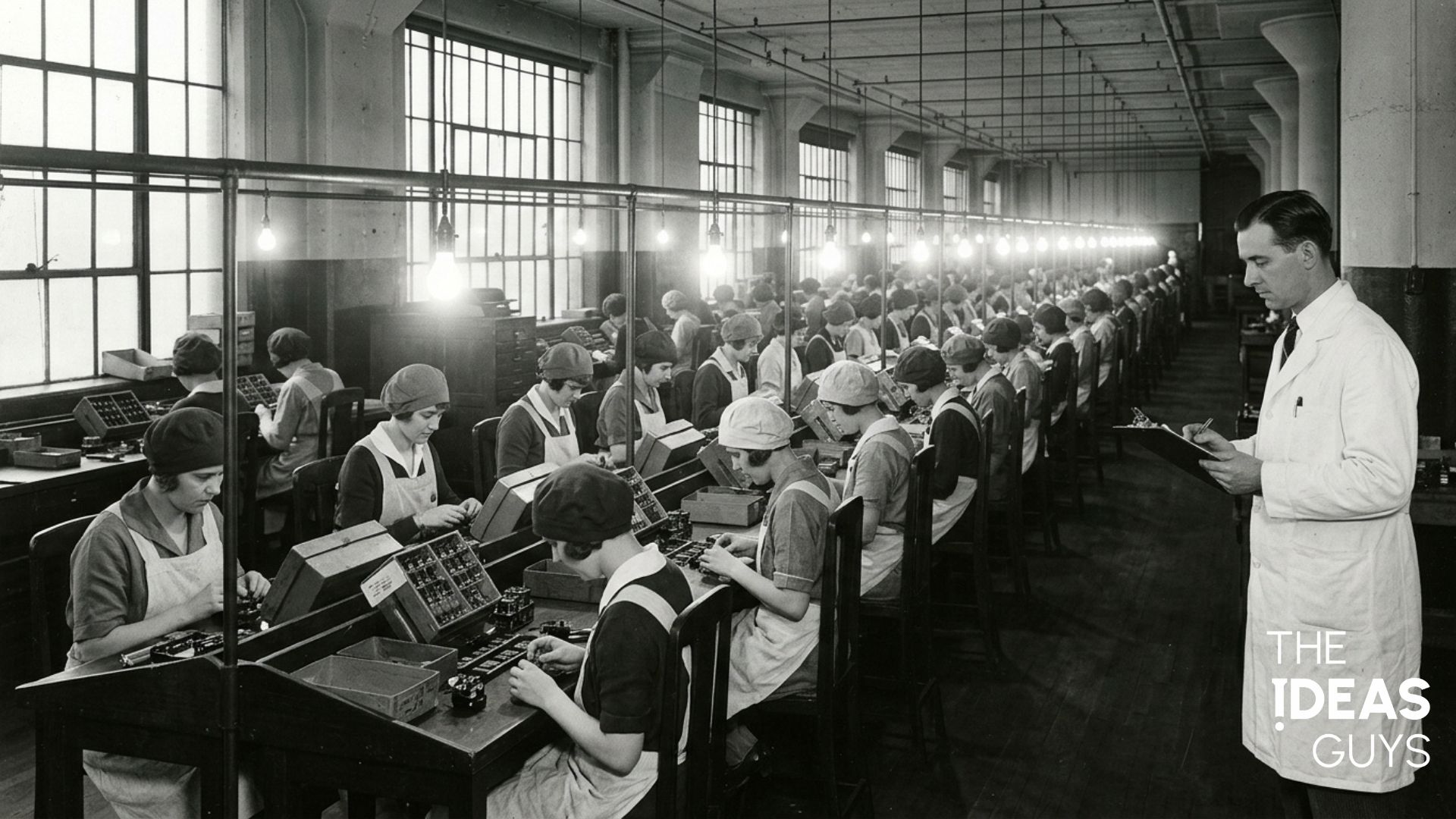
Henry Ford never said it. The most quoted line in the history of innovation, the one about customers who would have asked for faster horses, has no paper trail leading back to him at all. Quote Investigator went looking and found the earliest link between Ford and the phrase in a 1999 issue of a cruise industry trade magazine. The first time anyone attributed it to him directly was a 2001 letter to Marketing Week, a British publication, more than half a century after he died in 1947.
It’s worth sitting with the irony for a moment. Here is a line about people not knowing what they really want, and it exists because people wanted it so badly they built it themselves and hung it on the most convenient famous name. Keynote speakers wanted it. Product designers wanted it. Leaders who were tired of consultation meetings definitely wanted it. (I have had it on a slide myself, so read this as a confession as much as a correction.)
The real Henry Ford tells a different and rather less flattering story. In his 1922 memoir, My Life and Work, he recalls announcing in 1909 that the company would build one model only, and remarking that a customer could have the car painted
"any colour that he wants so long as it is black." Henry Ford,
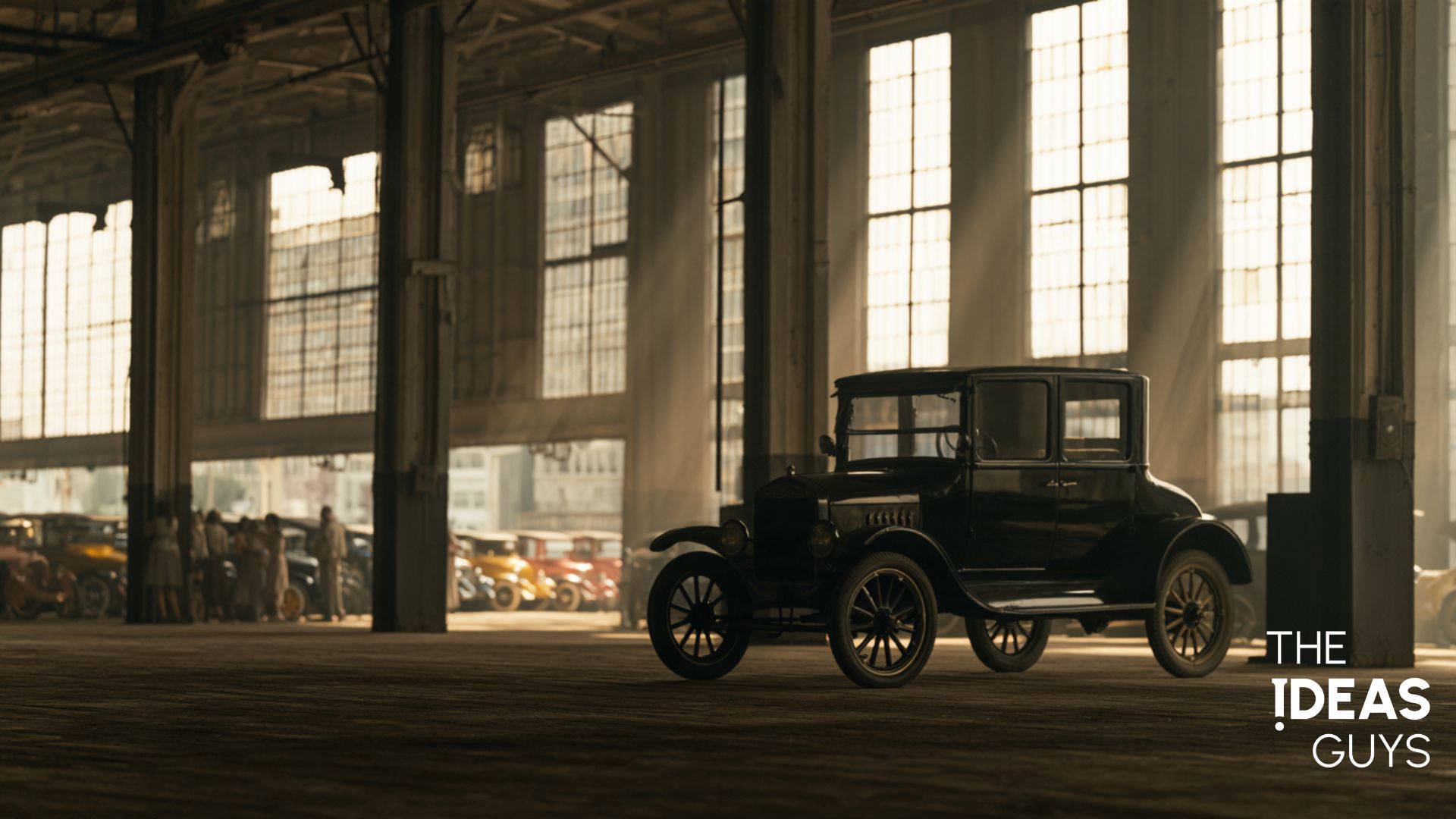
He adds, with what reads suspiciously like pride, that nobody agreed with him. For a while it didn't matter. The Model T put a nation on wheels. Then Alfred Sloan at General Motors began offering "a car for every purse and purpose": choice, colour, annual models, and the radical notion that the people paying might have preferences. By 1927 GM's sales had overtaken Ford's for the first time. On 26th May that year the fifteen millionth Model T rolled out of the Highland Park factory and production stopped. Ford shut his plants for months to retool, and Chevrolet sailed past.
So the man held up as the patron saint of ignoring customers was, in fact, the cautionary tale about ignoring them for too long. The myth gets the lesson almost exactly backwards. That is where this piece starts, because education has its own faster horses problem, and I suspect we are getting that lesson backwards too.
The paradox I have to own
Anyone who has read FRiDEAS for a while knows where I stand on student voice. Agency matters. Young people should be agents in their own learning, not passengers in it, and "use your voice" is something I have said to more sixth formers than I can count. I believed it as a Head of Sixth Form and I believe it now from the governors' table.
So I have a problem. The faster horses line, Ford's or not, is the favourite weapon of anyone who wants to skip the consultation. Why ask the pupils? They'd only ask for longer breaks and no homework. Why survey parents? They want the school they went to, with better parking. Every visionary head with a restructure in their back pocket has, at some point, reached for a version of the horse.
The uncomfortable bit is that they are sometimes right.
Steve Jobs put the case at its bluntest in a 1998 interview with BusinessWeek, arguing that designing products by focus group is hard because
"people don't know what they want until you show it to them." Steve Jobs
It is a defensible position, and the iPhone is decent evidence for it. But the iPhone carries a footnote that keynote slides tend to leave out. When it launched in 2007, Jobs did not want third-party apps on it. According to Walter Isaacson's epic biography, Apple board member Art Levinson phoned him around half a dozen times to lobby for them, and Jobs initially shut the conversation down. Developers grumbled, a whole jailbreaking scene grew up to do it anyway, and in July 2008 the App Store opened with 500 apps. It became the thing that made the iPhone indispensable. The visionary who supposedly didn't need to listen to anyone was rescued, in large part, by listening.
When I was Head of Sixth Form, I remember that the students petitioned me to allow them to go home in free periods. The policy at the time (which I’d inherited) was that students would go to a quiet study room or library when they didn’t have lessons. I thought that a little harsh so I compromised and allowed them to use the common room if they didn’t have a lesson (unless they were behind in their studies and going to the library was then compulsory.)
That wasn’t enough for most students and the council decided that they would petition further and that they should be allowed to go home rather than just the common room. I relented but it only lasted a couple of months because attendance and achievement got hit by hard! In fact, the students themselves actually asked us to change the ‘rules’ to help them organise themselves!
So both things can be true. People often cannot see the new paradigm. People can also see things the visionary misses entirely. The question for schools and colleges is not whether to listen. It is what we are listening for.
Why most of us can't see a new paradigm
There are good reasons stakeholders ask for faster horses, and stupidity is not one of them.
Thomas Kuhn, who I leaned on in Pierce the Veil, argued in The Structure of Scientific Revolutions (1962) that people working inside a paradigm don't experience it as a paradigm at all. It is simply how things are. Anomalies get explained away until they pile up so high that something has to give. Max Planck was blunter still. In his Scientific Autobiography he observed that new scientific truths tend to win not by converting their opponents, but because those opponents eventually die and a generation grows up already familiar with the new idea. Cheerful chap.
Psychology supplies the mechanism. In 1942 the American psychologist Abraham Luchins gave people a series of water jar puzzles: measure out a precise quantity using three jars of different sizes. The early problems could only be solved with a long, fiddly sequence of pours. Then came problems with a far simpler solution. Most people who had learned the long method kept using it, and when a problem arrived that the old method couldn't solve at all, many failed it, even though a simple answer was sitting in plain sight. People who had never been taught the long method spotted the shortcut easily. Luchins called this Einstellung, a fixed mental set. Experience doesn't just inform what we see. It decides what we are able to see.
Add William Samuelson and Richard Zeckhauser's 1988 research on status quo bias, which found that people disproportionately stick with whatever option is framed as the current state of affairs, even when an alternative would serve them better. Now you begin to understand why so many consultation exercises return a slightly polished version of what already exists.
Then comes the education-specific twist, and it is a big one. In 1975 the sociologist Dan Lortie published Schoolteacher and coined the phrase "the apprenticeship of observation". By the time anyone trains to teach, Lortie reckoned, they have spent something like 13,000 hours watching teachers at work. No other profession gives recruits that much exposure before they start. The catch is that it is exposure to the performance, not the thinking behind it, so we leave school with powerful and largely unexamined convictions about what teaching looks like.
Lortie was writing about teachers, but the idea doesn't stop at the staffroom door. Every parent at every consultation evening has served the same apprenticeship. So has every governor, every inspector and every minister. Nobody arrives at a conversation about schooling as a neutral consumer. They arrive as a graduate of a system, carrying thousands of hours of training in what a school is supposed to be (or not!). When we ask them what they want, we are asking people who spent their childhoods on horseback to imagine the engine.
I don't want to let leaders off the hook, though, because the most striking UK example cuts the other way. In 2003, after the A-level grading row that ended with Estelle Morris resigning as Education Secretary, Mike Tomlinson, a former Chief Inspector of Schools, was asked to chair a working group on 14–19 reform. His final report, published in October 2004, proposed an overarching diploma that would bring GCSEs, A-levels and vocational qualifications into a single framework.
Headteachers and vice-chancellors broadly welcomed it. The stakeholders, for once, could see the new paradigm clearly. It was the system that couldn't. The 2005 White Paper, under Ruth Kelly, largely rejected the overarching diploma and kept GCSEs and A-levels as the "gold standard". The specialised diplomas that did emerge were wound down by the coalition a few years later.
So it isn't always the customers who want faster horses. Sometimes it is the people running the stables.

Voice without influence is customer service theatre
If listening is necessary but not sufficient, what does good listening actually look like? Education has a better answer than most sectors, and a good chunk of it was developed at Queen's University Belfast.
In 2007 the children's rights scholar Laura Lundy published a paper in the British Educational Research Journal with a title that deserves to hang in every school office:
"'Voice' is not enough." Laura Lundy
Lundy started from Article 12 of the UN Convention on the Rights of the Child, which the UK ratified in 1991. It gives children the right to express their views on matters affecting them and to have those views given due weight. Her model breaks that into four elements.
- Space: a safe, inclusive opportunity to form and express a view.
- Voice: support to express it.
- Audience: someone with the power to act who is genuinely listening.
- Influence: the view being acted on as appropriate, with feedback about what happened and why.
Most school student voice falls over at the last two. The student council is consulted on the new hand dryers. The pupil survey goes out each summer, the results become a slide in an INSET deck, and nobody ever tells the pupils what changed as a result. Roger Hart's ladder of participation, written for UNICEF in 1992, gives that pattern a name. The bottom three rungs (manipulation, decoration and tokenism) aren't participation at all. They only look like it. That is precisely the problem.
Albert Hirschman's Exit, Voice and Loyalty explains why this matters more in schools than almost anywhere else. When customers are unhappy, Hirschman argued, they have two broad responses: leave (exit) or speak up and try to change things from within (voice). Organisations learn from both. But a Year 9 pupil cannot exit. Parents can, in theory, though anyone who has been through school admissions in a popular area knows exactly how theoretical that is. When exit is closed off, voice is the only feedback channel left. Ignore it, or perform listening without acting on it, and you don't get a better school. You get pupils who have learned, very efficiently, that their voice is decorative. That is a lesson in agency too. Just the wrong one.
So the paradox sharpens. I believe student voice is paramount. I also believe students will often ask for faster horses. Those two beliefs only sit comfortably together if we stop treating voice as a ballot on solutions and start treating it as intelligence about experience.
Which is where a restaurateur comes in.
What Guidara was actually listening for
I wrote about Will Guidara's Unreasonable Hospitality in The Host or the Gatekeeper, mainly about why support functions in schools so often behave like bouncers. This time I want a different part of his story, because Eleven Madison Park is a near-perfect case study in getting the listening balance right (and, eventually, wrong).
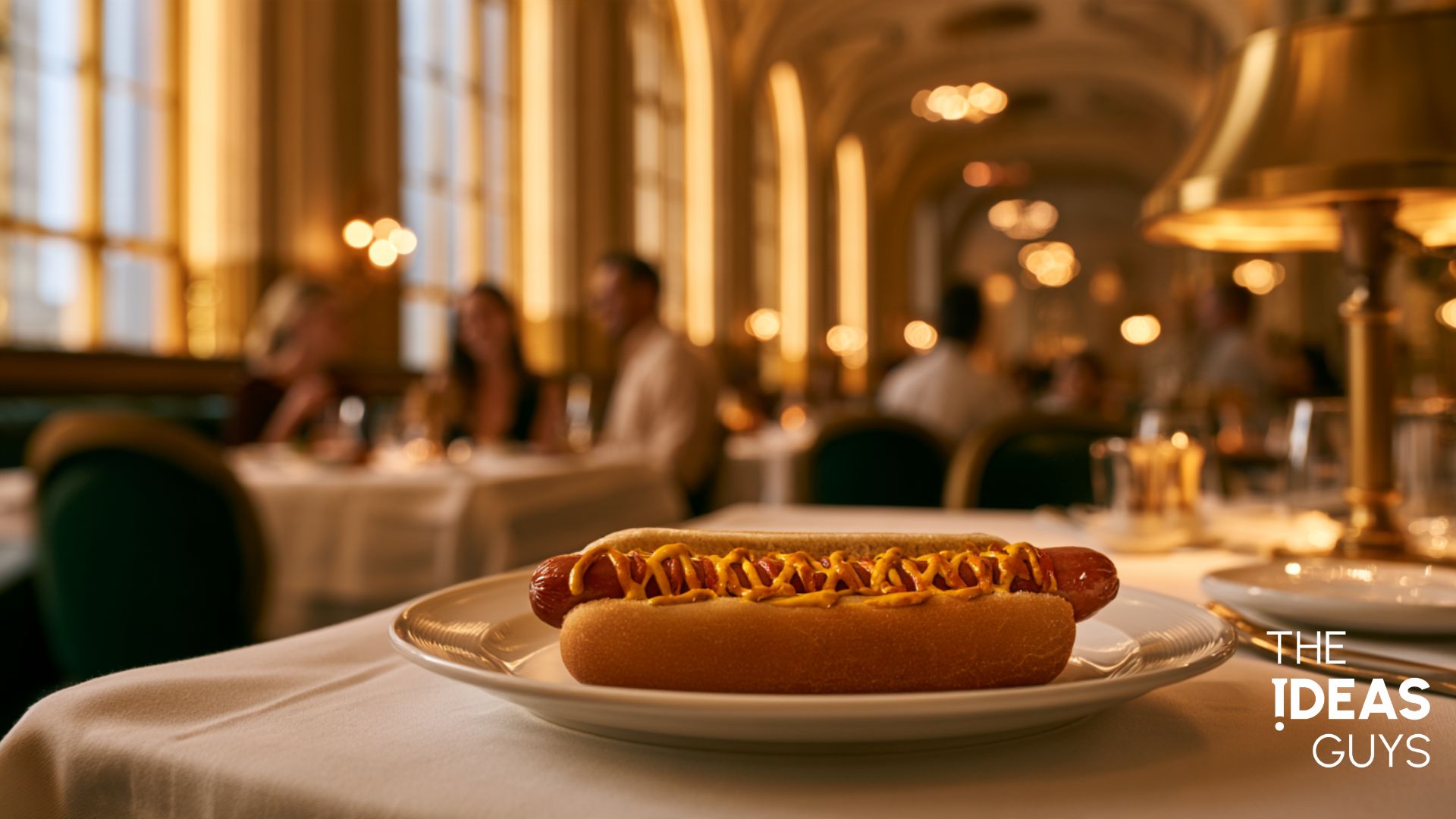
I’ll start with the hot dog, since everyone does. A table of European visitors on their last night in New York were talking about the city's great restaurants they had eaten at, and Guidara overheard them say the one thing they hadn't tried was a street hot dog. He ran outside, bought one from a cart for a couple of dollars, had the kitchen plate it properly, and served it as a surprise course. It became the founding legend of his whole philosophy.
What usually gets missed is how he found out. He didn't ask. There was no comment card, no post-meal survey asking for "one thing we could do better". Had those diners been asked, they would almost certainly have said everything was wonderful, because that is what people say at very expensive restaurants. The insight came from what they valued when nobody was asking them to evaluate anything. Guidara then built that into the structure. He created a role called the Dreamweaver, whose job was to help the team turn overheard details into gestures like that hot dog. And he paid for it with what he calls the rule of 95/5, explaining to McKinsey that the aim was to
"Manage your money like a crazy person 95 percent of the time" Will Guidara
And in doing so, the remaining five per cent could be spent "foolishly" on moments people would never forget.
Now the part of the story that matters most for this argument. The same restaurant that obsessed over guests' unspoken wishes was extraordinarily willing to deny them what they explicitly asked for. Around 2010, Guidara and chef Daniel Humm scrapped the à la carte menu and replaced it with a cryptic grid of single ingredients. Food forums lit up with confusion and a fair amount of fury. By 2012 they had gone further, to a single New York tasting menu with barely any choice at all. Had they polled their diners, nobody would have voted for less choice at a higher price. In 2010 the restaurant entered the World's 50 Best Restaurants list at number 50, dead last. By 2017 it was number one.
That is the balance, in a single building. Guidara and Humm owned the paradigm (the shape of the experience) and refused to let it be focus-grouped. But they listened obsessively, almost forensically, to the experience of the people inside it.
The coda is instructive. After Guidara left in 2019, Humm took the restaurant fully plant-based in 2021, a bold paradigm shift by any standard. In 2025 he brought meat and fish back as options, acknowledging that the plant-only menu was excluding too many diners. As he put it to The New York Times, the best way to keep championing plant-based cooking was to
"let everyone participate around the table." Daniel Humm
Vision without listening eventually hits a wall. Even at the best restaurant in the world.
So what is the education version? The paradigm (curriculum intent, pedagogy, the shape of the day, the bold bet on something genuinely new) is often legitimately a matter of professional judgement that shouldn't be settled by a show of hands. But the experience of living inside it belongs to the people who live inside it. The walk from the bus stop to the gate. The first five minutes of a lesson. The parents' evening queue. The tone of the text home about a missed homework. The Year 7 who has no idea which door to use. That is where Guidara would be listening, and almost no pupil survey asks about any of it.
Ask about friction, not designs
If there is a practical principle in all of this, it is simple to state and hard to practise: ask people about their experience, not about your solutions.
The faster horses line, invented or not, actually contains this lesson if you read it slowly. Nobody wanted a horse. They wanted to get somewhere sooner, more reliably and with less mud. A question about the horse gets an answer about the horse. A question about the journey gets an answer about the journey, and the journey is where a new paradigm becomes visible. Ask pupils whether they'd like a different timetable and you'll get opinions about lunch. Ask them when in the week they feel most lost, and you might learn something that redesigns the timetable.
A few things follow from that.
Prototype rather than poll. Jobs was right that people struggle to want what they have never seen, so show them. Pilot the new homework model with one year group and ask about the experience, not the theory. People who have used a thing can tell you a great deal about it. People asked to imagine it mostly tell you about the old thing.
Close the loop, every time. Lundy's influence element isn't satisfied by acting on feedback quietly. It requires telling pupils what was done with their views and why, including when the answer was no. "You said, we did" is a start. "You said, we didn't, and here's why" is where trust is actually built.
Listen sideways. Some of the richest intelligence in any school is overheard, in the dinner queue, on the minibus, in the form room before registration. Who are your Dreamweavers already, and has anyone given them permission to act on what they hear?
And then the sharpest irony, the one I have had to sit with longest. Our students have served their own apprenticeship of observation. By Year 11 they have thousands of hours of evidence about what school is. Ask them to design the future of learning and many will draw a slightly friendlier version of the present: fewer tests, more choice, better Wi-Fi. They will ask for faster horses too, not for lack of imagination but because we have given them a very narrow stable to imagine in.
Which means genuine agency can't just be a vote among the options we already offer. It has to include widening what young people can see. Take them into workplaces, colleges and communities. Show them radically different models of learning. Give them real problems with no pre-set answer. Aristotle called the capacity to judge well in particular circumstances phronesis, practical wisdom, and he was clear that it develops through experience rather than being handed over. We cannot ask young people to exercise judgement about a paradigm they have never encountered. Widening their horizon is part of respecting their voice, not a substitute for it.
The car nobody ordered
Henry Ford didn't say it, and if he had, he would have been half right in a way that eventually cost him his market lead. That is a fair summary of where education stands on stakeholder voice. Leaders who listen to nobody end up building Model Ts long after people have stopped wanting them. Leaders who take every request literally end up polishing the horse.
The balance isn't found halfway between those two. It is found by being clear about which questions belong to whom. Professional judgement owns the bold bets. Pupils, parents and staff own the truth about what it is like to live inside them. Agency means taking both seriously at the same time, and accepting that the people you serve will sometimes be wrong about the solution and almost never wrong about the experience.
So here is a question to take into your next leadership meeting. When did your school last act on something a pupil told you about their experience, and then go back and tell them? And if nobody in the room can remember, what exactly are you listening for?
Key Takeaways
- The most famous quote about ignoring customers is fake. Henry Ford was never linked to the "faster horses" line until 1999, and the real Ford's refusal to offer choice helped General Motors overtake him in 1927.
- People struggle to see a new paradigm from inside the old one. Research on fixed mental sets and status quo bias shows that experience shapes what we are able to notice, so stakeholders often ask for a better version of what already exists.
- Everyone in education has served an apprenticeship of observation. Parents, governors, teachers and policymakers have all spent thousands of hours in classrooms, which quietly shapes what they believe a school should be.
- Voice without influence teaches the wrong lesson. Student voice only counts when it has space, voice, audience and influence, and when young people are told what happened to their views, including when the answer was no.
- Own the paradigm, but listen forensically to the experience. Professional judgement can lead on bold changes, while pupils, parents and staff are the experts on what it is actually like to live inside them.
- Real agency means widening what young people can imagine. Students raised inside one model of school will ask for faster horses too unless they are shown, and allowed to experience, what else is possible.
Every school says it listens. Fewer are clear about what they are listening for, or which decisions belong to whom. The challenge this week is a small one: pick one piece of pupil feedback from the last term, act on it or explain why you won't, and tell the pupils what you did. Then notice what happens to the next conversation.
Further Reading
Discover more interesting articles here.