.png)
This is part 2 in the series The Power of Words. Read part 1, The Grammar of Reality.
Let’s play a game. Think of the word "nice." You use it constantly. Nice weather. Nice person. Nice cup of tea. It's the verbal equivalent of beige - pleasant, inoffensive, essentially meaningless. Now consider that "nice" comes from the Latin nescius, meaning ignorant. It passed through Old French as nice, meaning foolish or simple. For several centuries in Middle English, calling someone "nice" was a mild insult. Silly. Wanton. Lascivious, even, at one point. The word has been on quite a journey!
Or take "awful." Today it means terrible, dreadful, the adjective you reach for when the broadband goes down or England exit a tournament on penalties. But awful originally meant full of awe - inspiring wonder and reverence. Something awful was something that stopped you in your tracks with its magnitude. The awful majesty of a cathedral. The awful silence before a storm. It has inverted almost completely, dragging its meaning from the sublime to the catastrophic over the course of a few centuries.
Words have hidden lives. They carry histories, contradictions, forgotten associations, and buried meanings that most of us walk past every day without a second glance. In Part 1 of this series, I argued that language constructs reality rather than simply describing it - that the words we use shape what we can think. In this piece, I want to go sideways into something that I find genuinely joyful: the archaeology of language. What happens when you start digging into the words you take for granted? What do their origins reveal about the cultures that made them? And why does any of this matter beyond dinner-party trivia?
It matters rather a lot, as it turns out and I know I’m a nerd but if you’ve got this far in the piece, you might just be too!

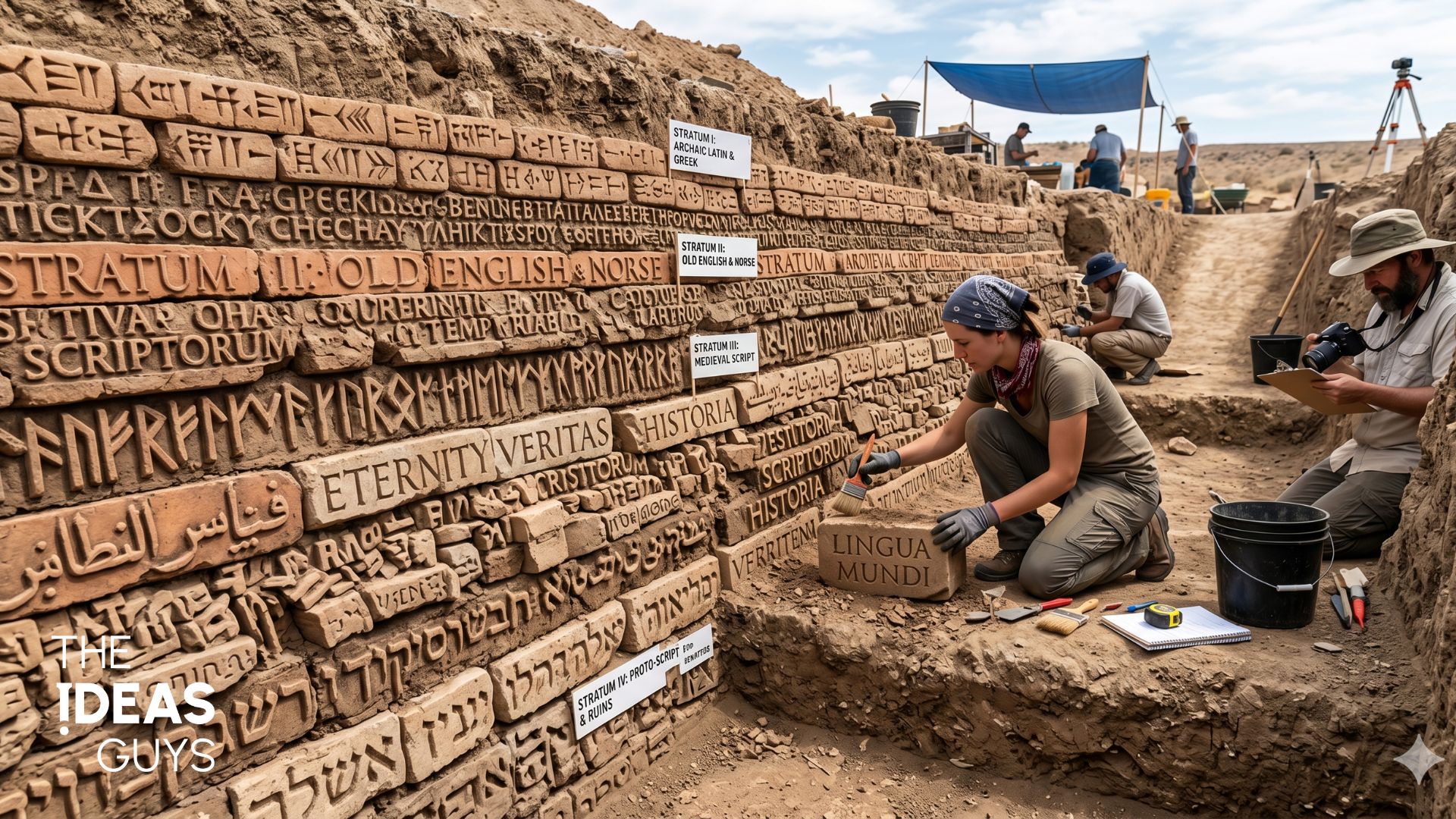
Every word is a fossil
The discipline of etymology - the study of word origins - is one of the more underrated tools for understanding how humans have organised their world over time. Words don't emerge from nowhere. They carry the sediment of the civilisations that coined them, borrowed them, distorted them, and passed them on.
Ralph Waldo Emerson captured this with characteristic precision in 1844 when he wrote,
“Language is fossil poetry. As the limestone of the continent consists of infinite masses of the shells of animalcules, so language is made up of images or tropes, which now, in their secondary use, have long ceased to remind us of their poetic origin…finds the deadest word to have been once a brilliant picture." Ralph Waldo Emerson
The British philosopher Owen Barfield, a somewhat underappreciated member of the Oxford Inklings whose influence on both C.S. Lewis and Tolkien was considerable, extended this idea into something more radical in his 1926 book History in English Words. For Barfield, words were not just fossils of poetic images but fossils of consciousness itself. As he put it, words "may be made to disgorge the past" to reveal "a change not only in the ideas people have formed about the world, but a change in the very world they experience." Etymology, in Barfield's hands, becomes a history of the human mind - compressed, preserved, waiting to be read.
When we use the word "spirit," we're reaching back to the Latin spiritus, meaning breath. The connection between breath and life, between breathing and the animating force of a person, was so fundamental to ancient experience that it became the root of an entire metaphysical vocabulary. Spirit, inspire, expire, respire - all of them breathe together at the etymological root. When you feel "inspired," you are, in the original sense, being breathed into.
"Disaster" comes from the Latin dis-astrum - bad star. It encodes an entire cosmology, a worldview in which the stars governed fate and a misaligned celestial configuration could ruin everything. We stopped believing in astrology centuries ago, but the word didn't get the memo. Every time you describe something as a disaster, you're unconsciously invoking a pre-Copernican universe.
"Salary" comes from the Latin salarium, connected to sal - salt. Roman soldiers were given an allowance to buy it, because salt was genuinely precious as a preservative before refrigeration. Whether you earn a good salary or a poor one, you are carrying a crystallised memory of the ancient salt trade in your vocabulary. The phrase "worth their salt" pulls from the same root. So does "sauce," "salsa," and "sausage." Salt runs through English like a vein of mineral through rock.
This is not mere trivia. Understanding that words carry historical meaning changes how you read them. It makes you more attentive to the assumptions embedded in the language you're using - assumptions baked in centuries ago, often for reasons that have long since ceased to apply.
The unstable meanings of everyday words
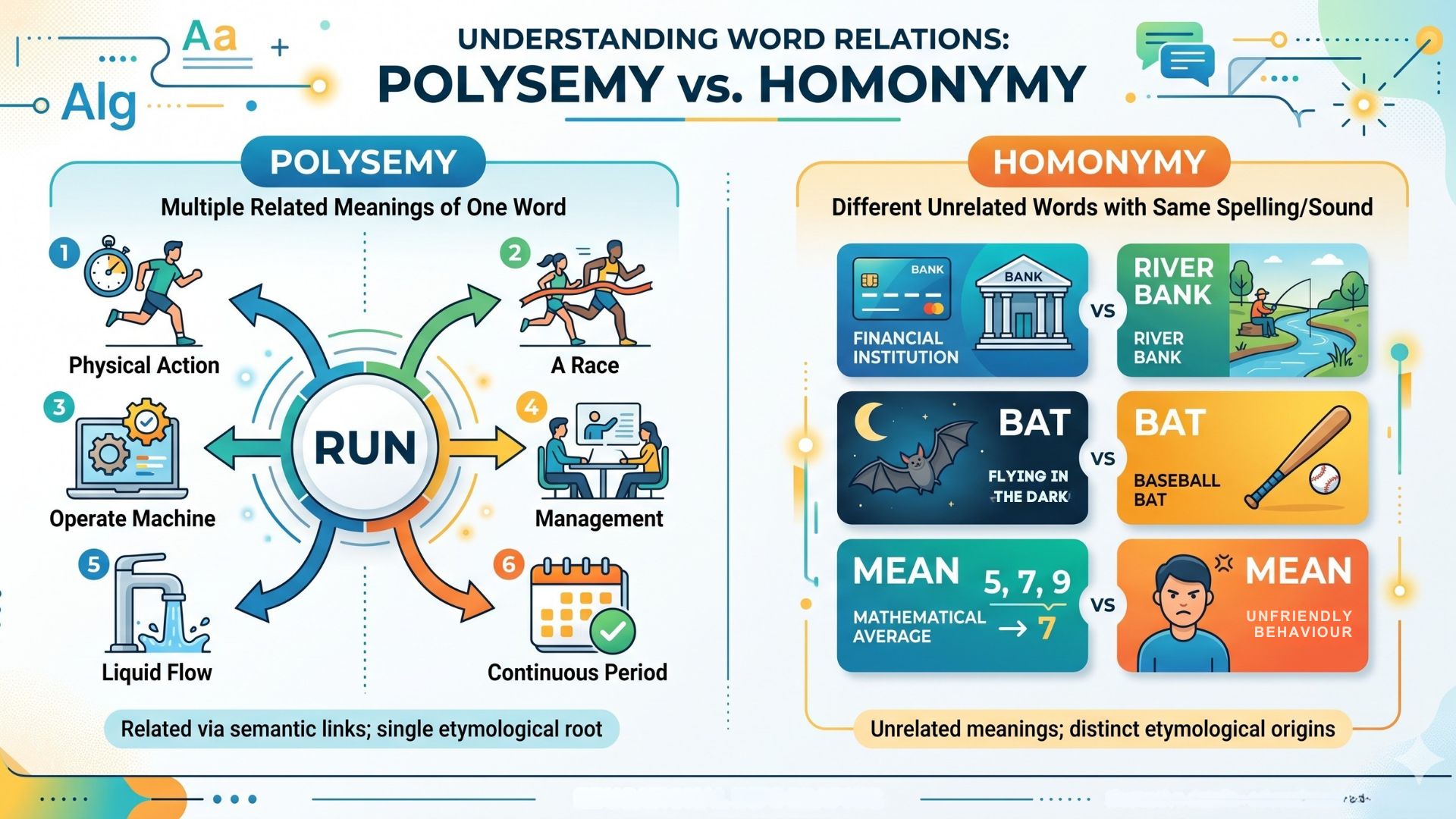
One of the most disorienting things etymology teaches us is that words rarely mean what they once meant, and often mean nearly the opposite. Linguists call this semantic drift - the gradual shift in a word's meaning over time - and it operates in several directions.
There's pejoration, where a word sinks in respectability. "Villain" originally meant a farm worker - someone who worked on a villa or estate. The association with low social status gradually acquired moral connotations, and by the time Shakespeare was writing, it meant what it means now. "Knave" followed a similar path from boy to scoundrel. "Lewd" once simply meant lay, as in non-clerical - a lewd person was just an ordinary member of the public rather than a priest.
Then there's amelioration, where a word improves over time. "Knight" comes from the Old English cniht, meaning boy or servant. Its elevation to chivalric status reflects a particular medieval cultural project, dressing up the servant class in armour and calling it nobility. "Pretty" once meant cunning or crafty. "Fond" meant foolish.
And then there's the category I find most fascinating: words that hold contradictory senses in tension simultaneously. These are called contranyms or auto-antonyms - words that are their own opposites - and they are genuinely peculiar once you start noticing them.
"Sanction" can mean both to approve and to penalise. You can sanction a course of action - authorise it - or you can sanction a country - impose restrictions on it. Both meanings are in active use, which makes "the sanctions were sanctioned" a perfectly grammatical sentence that communicates essentially nothing without context.
"Cleave" means both to split apart and to cling together. "The axe cleaved the wood" and "she cleaved to her principles" are both correct, pulling in opposite directions. "Oversight" means both careful supervision and a mistake caused by failing to notice something - a word that manages to be simultaneously the disease and the cure. "Dust" can mean to add particles or to remove them, depending entirely on context.
These aren't errors or corruptions. They're evidence of how language operates under real conditions - borrowing, adapting, serving multiple masters, accruing new meanings without always shedding old ones. The messiness is the message.
The hidden assumptions words carry
Etymology isn't just playful archaeology. It reveals the assumptions baked into vocabulary that we might not otherwise notice - assumptions about gender, power, nature, and social order that persist quietly in words we consider neutral.
Take "hysteria." It derives from the Greek hystera, meaning womb. The ancient belief - which persisted in various forms well into the nineteenth century - was that certain emotional disturbances in women were caused by the uterus becoming disturbed. The word has long since detached from this specific medical theory, but it still carries the residue. When someone is described as "hysterical," they are - through the etymology - being pathologised through the lens of their presumed reproductive biology. Worth knowing before you use it.
"Lunatic" comes from luna - the moon. The belief that mental disturbance was caused or worsened by the lunar cycle persisted for centuries. We've long since abandoned the cosmology, but the word remains.
"Peculiar" comes from the Latin peculium, meaning private property - specifically livestock. A peculiar thing was something belonging exclusively to you, set apart as yours. The path from "this ox is mine" to "this person is odd" is longer than it looks, but etymologically continuous. Something peculiar is, at root, something that stands apart from the common herd, which is interesting, given how we use it.
What this reveals is that language is never culturally innocent. Every vocabulary is a worldview. The words available to you in a given language encode the assumptions, fears, hierarchies, and preoccupations of the people who built and shaped it. You can push back against those assumptions - you can use words critically and consciously - but you can't pretend they aren't there.
The pleasure of the pun - wordplay as cognitive tool
I want to make a case for wordplay that goes beyond entertainment, because it's often dismissed too quickly.
The pun is routinely described as the lowest form of wit - though whoever coined that phrase was probably just annoyed at not having thought of one fast enough. There's a serious cognitive argument for why punning and linguistic double-meaning are actually markers of sophisticated thinking rather than facile cleverness.
To make or appreciate a pun, your brain has to hold two separate meanings of a word in mind simultaneously - to recognise the surface meaning being deployed and the secondary meaning being smuggled in alongside it. This requires rapid parallel processing, the ability to inhabit two semantic frames at once, and a kind of cognitive flexibility that is genuinely related to creative thinking.
I've written before - in the Everything Connects to Everything Else piece - about Arthur Koestler's concept of bisociation: the creative collision between two incompatible frames of reference that produces genuine insight. In that piece, the focus was on connective thinking across disciplines. But Koestler's concept applies equally here, at the level of individual words. The pun is bisociation in miniature - the same cognitive move as the breakthrough hypothesis, compressed into a single sound, which is precisely why dismissing it as the lowest form of wit has always struck me as exactly backwards.
Shakespeare understood this better than almost anyone. His plays are dense with wordplay operating on multiple levels simultaneously - bawdy double meanings the groundlings could enjoy, philosophical resonances the educated could appreciate, structural irony rewarding the most attentive. When Hamlet says "I am too much in the sun" - playing on son/sun - he's doing something more than making a pun. He's compressing his entire situation into a single sound: the excess of royal attention, the grief of losing his father, the wrongness of the new order. One syllable, several truths, held in tension.
The poet Seamus Heaney was a master of the same technique. His poem Digging opens with the image of his pen resting between finger and thumb before pivoting to his father digging in the garden - and the poem's entire argument about inheritance, craft, and the different kinds of labour connecting generations is embedded in the space between those two acts. The word does double duty. It carries the weight.
In modern culture, Gary Delaney is somewhat a master of punnage! His classic, “I used to be a banker, but I lost interest” is one of my favourites. Some of his others are a little blue for many of the readers.
This is what good writers know and poor ones don't: that the most resonant words are often the ones doing more than one job. Choosing the merely accurate word is a start. Choosing the word that's accurate and carries an overtone, a history, an irony - that's craft.
When words get weaponised
There's a shadow side to all this that deserves honest attention, because the same sophistication that makes wordplay pleasurable can make it dangerous.
Advertising has always understood the power of linguistic ambiguity. The classic British example is the Carlsberg slogan "Probably the best lager in the world" - a claim so carefully qualified as to be legally unassailable while sounding like confident boasting. The word "probably" is doing extraordinary work: it protects the company from trading standards while performing certainty. Simultaneously humble and arrogant, hedged and bold. That's not an accident.
Political language performs similar tricks. During the Brexit debates, the phrase "take back control" was a masterclass in calculated ambiguity. Control of what? For whom? Taken back from when? The deliberate vagueness was the point - it allowed every listener to project their own grievance onto the phrase. The three words were a Rorschach test dressed up as a policy platform.

In the corporate world, the same technique appears as strategic vagueness - language designed not to communicate but to perform communication. "We're committed to a journey of continuous improvement" says almost nothing, commits to almost nothing measurable, and yet sounds purposeful. The vagueness isn't a failure of drafting. It's the feature.
Understanding etymology and the hidden lives of words makes you harder to manipulate in this way. When you know that "sanction" is its own opposite, you start asking which meaning is being deployed and why. When you recognise that "reform" says nothing about whether the reshaping is an improvement, you stop treating it as an automatically positive word. When you notice that "disruption" has gone from describing something damaging to something desirable - purely through tech-sector rebranding - you become appropriately sceptical when someone uses it approvingly about your industry.
This is not cynicism. It's literacy.

What all this means for how you use words
Etymology can seem like an academic indulgence if you don't connect it to something you can actually use. So let me bring it back to the practical.
The first application is attentiveness. Start noticing words you use automatically and asking where they come from. The word "education" comes from the Latin educare, meaning to lead out or draw forth. That etymology encodes an entire philosophy of teaching - one in which education is about drawing out what's already there rather than pouring content in. Every time you use the word, you're in the vicinity of that debate, whether you know it or not. Knowing it sharpens your thinking about the thing itself.
The second is precision. The habit of reaching for the etymologically rich word - the one doing more than one job, carrying historical depth, landing with more resonance than its near-synonym - is what distinguishes good writing or speaking from adequate versions of the same. The thesaurus helps you find options; etymology helps you choose between them.
The third is scepticism. When you encounter a word being used to frame an argument - particularly in political, corporate, or institutional contexts - ask what the word is doing, what it's obscuring, and who benefits from that particular framing. Language is never innocent, even when it sounds neutral. Especially when it sounds neutral. Ask questions, always.
The fourth, and perhaps most important, is delight. There is genuine pleasure in discovering that "companion" comes from the Latin for those who share bread together (com + panis) - that friendship is, at its etymological root, a shared meal. That "travel" and "travail" share a root in a medieval word for suffering - that journeys and hardship were once considered essentially the same thing. That "person" derives from the Etruscan phersu, referring to a theatrical mask - which means that every time you talk about a person, you are, etymologically, talking about a performance.
Words are not just labels. They're not just tools. They are, in Barfield's formulation, fossils of consciousness - and digging into them changes how you stand on the surface.
Key Takeaways
1. Etymology is archaeology - and it reveals hidden assumptions. Every word carries the sediment of the culture that coined it. "Hysteria," "disaster," "villain" - words we consider neutral are often freighted with ancient worldviews, power structures, and long-discredited beliefs. Knowing this makes you a more critical user of language.
2. Semantic drift means words regularly mean the opposite of what they once did. "Awful," "nice," "lunatic," "peculiar" have all travelled enormous distances from their origins. This isn't corruption - it's language doing what living things do. But it's worth tracking, because the journey often reveals something interesting about cultural priorities.
3. Contranyms - words that mean opposite things - are more common than you think. "Sanction," "cleave," "oversight," "dust" all contain their own contradictions. This ambiguity isn't always accidental; it's often exploited deliberately in political and corporate language to obscure rather than communicate.
4. Wordplay is a cognitive tool, not just entertainment. The ability to hold two meanings in mind simultaneously is closely related to creative thinking - what Arthur Koestler called "bisociation," a concept I explored in the context of connective thinking in an earlier piece [link]. The pun isn't cheap. It's the same cognitive move as the breakthrough hypothesis, just smaller.
5. Clever language can obscure as easily as it can illuminate. Advertising, political slogans, and institutional language routinely exploit linguistic ambiguity to avoid accountability. Knowing how etymology works makes you harder to manipulate with strategically vague language.
6. The delight is the point. "Companion" means bread-sharer. "Inspire" means to breathe into. "Travel" and "travail" share the same painful root. Language is richer than it looks. Looking more closely at it is one of the most freely available intellectual pleasures there is.
In Part 3 of this series - the final piece - we move from the history of words to the practice of expanding them. How does building vocabulary actually change the way you think? And what does it mean that some thoughts are only available to you if you have the words for them?
Further Reading
Discover more interesting articles here.